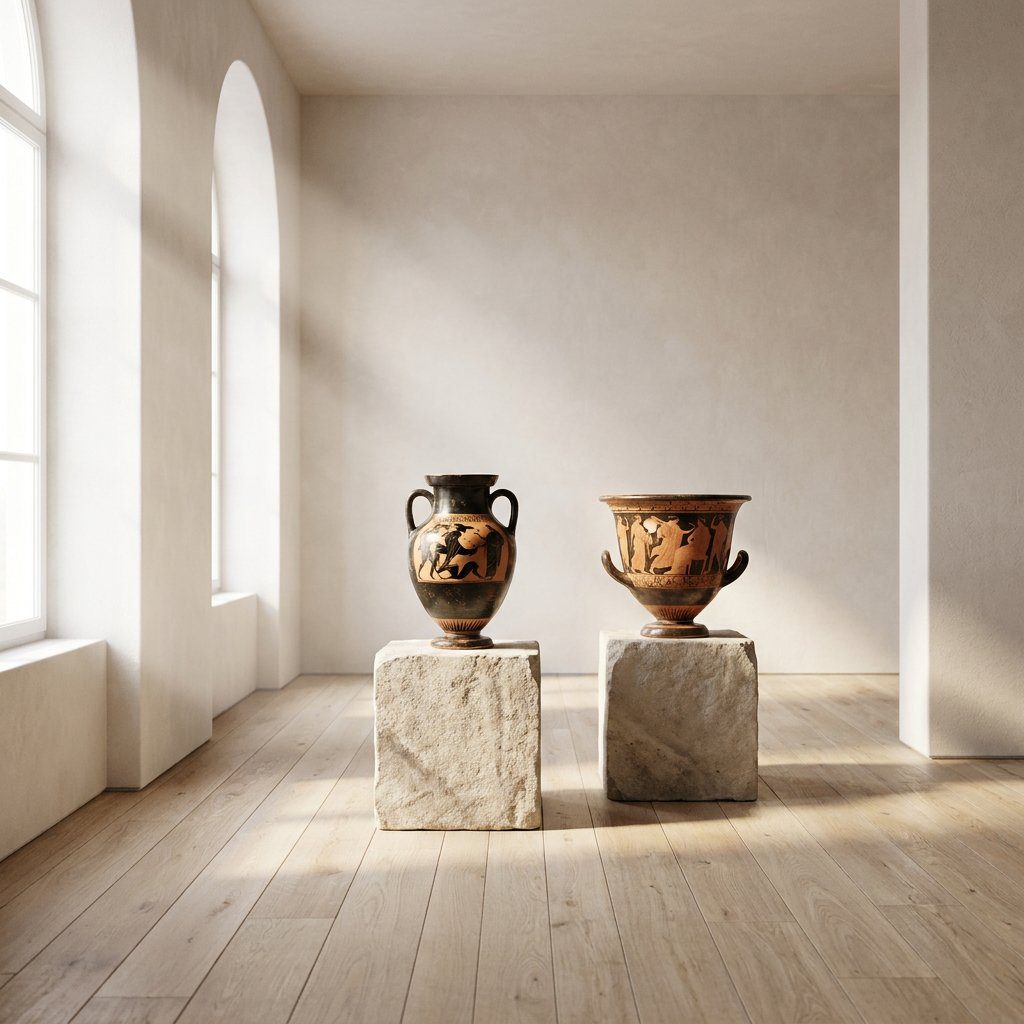
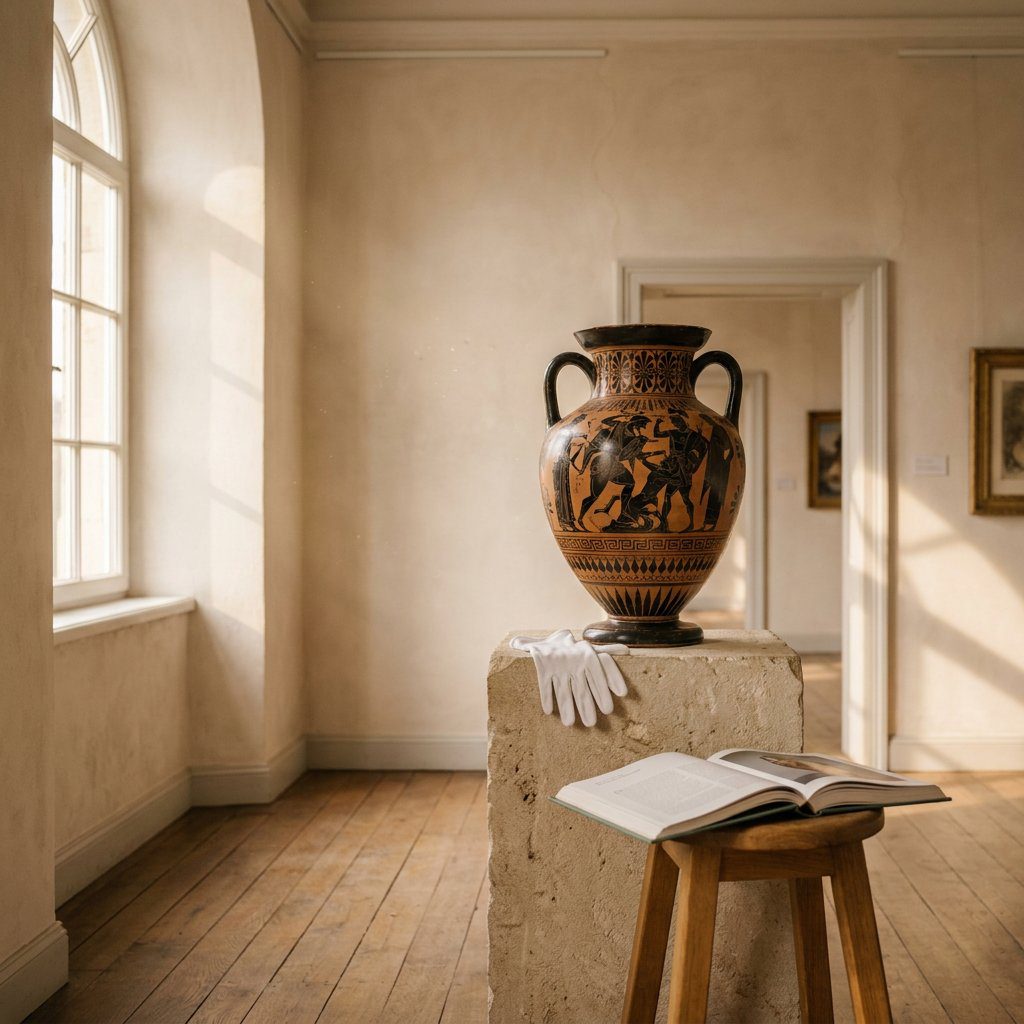
Greek amphora replica
A Greek amphora replica brings the character of classical pottery into a contemporary interior with far greater accessibility than an original antiquity. For collectors, designers, and institutions, it offers the visual presence of an iconic ancient form while fitting real spaces and project needs. Museum Replicas offers handcrafted Greek vase replicas, including amphora forms, with custom-made options for clients seeking a refined and historically informed piece.
If you are considering a Greek amphora replica, the most important questions are usually simple: what qualifies as a replica, what separates a strong reproduction from generic decor, and how can the piece be tailored to your setting. The answers below focus on those practical decision points.
What defines a Greek amphora
An amphora is one of the most recognizable vessel forms from the ancient Greek world. It is typically identified by its elongated body, narrow neck, and two vertical handles that connect the shoulder to the neck. Historically, amphorae were associated with storage and transport, but they also became important artistic objects through painted decoration and carefully balanced proportions.
When people search for a Greek amphora replica, they are usually looking for more than a vase shape alone. They want a piece that reflects the visual language of classical Greek pottery: disciplined form, historical reference, and decoration that feels rooted in antiquity rather than loosely inspired by it.
What to look for in a quality replica
The strongest replicas do not rely on the word replica as a label only. They show clear respect for the original tradition through shape, proportion, surface treatment, and overall presence. A well-chosen piece should feel intentional from a distance and rewarding up close. Readers who want to understand how these replicas are crafted can also better assess quality.
- Faithful form – The silhouette should read clearly as an amphora, with balanced neck, body, foot, and handle placement.
- Historically informed decoration – Painted scenes, ornamental bands, or figure work should feel connected to Greek vase traditions rather than generic classical styling.
- Handcrafted character – Slight individuality is often part of what gives a reproduction warmth, depth, and collector appeal.
- Interior suitability – Scale matters. The right piece should suit its intended room, shelf, console, pedestal, or project setting.
- Credible source – A specialist in historical art reproductions is more likely to deliver a piece with visual discipline and appropriate context.
Why amphora replicas remain sought after
The appeal of a Greek amphora replica lies in its combination of sculpture, history, and decoration. Even without knowing every historical detail, most viewers immediately recognize the form as part of the classical world. That instant legibility makes amphorae especially effective in interiors where you want an object to add elegance, heritage, and cultural depth.
They also suit a wide range of settings. In a private residence, an amphora can act as a focal accent with architectural presence. In hospitality, office, or institutional projects, it can support a broader classical or historically inspired design language without requiring access to rare originals.
Custom Greek amphora replicas at Museum Replicas
Museum Replicas offers Greek vase replicas and custom-made reproduction work within this category, including amphora forms. This is particularly valuable when a standard decorative object is not enough and the piece needs to suit a defined space, collection concept, or design scheme.
Custom work can be especially relevant if you
need a replica that aligns more closely with your interior proportions or project vision. For private collectors, that means a more considered fit within the home. For designers and institutions, it means greater control over how the piece contributes to the overall environment.
Because each project can differ, it is worth approaching the selection with the intended placement, scale, and visual role in mind from the start.
How to choose the right piece for your space
Start with the role the amphora will play. If it is meant to anchor a room, prioritize silhouette and presence. If it will sit among books, sculpture, or framed art, look for a piece whose proportions and decoration support the surrounding objects rather than compete with them.
It also helps to think in terms of viewing distance. A piece seen from across a room should have a strong outline and clear visual rhythm. A piece placed in a study, library, or reception area may benefit from more detailed painted elements that reward closer attention.
| Priority | What to consider |
|---|---|
| Shape | Choose an amphora with proportions that feel balanced in the intended location. |
| Scale | Match the piece to the height and width of the furniture, pedestal, or niche where it will be displayed. |
| Historical feel | Look for decoration and form that clearly reference Greek vase traditions. |
| Project fit | Consider custom-made options when an off-the-shelf size or look would be too limiting, especially when choosing the right museum replica for a professional setting. |
FAQ
Is a Greek amphora replica purely decorative?
For most buyers today, yes. The main value is visual and cultural: the form, historical reference, and presence it brings to an interior or collection.
How is a Greek amphora different from a generic classical vase?
A Greek amphora has a distinct historical form, most notably its two-handled structure, elongated body, and classical proportions. A generic classical vase may borrow some of that appearance without following the same tradition closely.
Can I request a custom Greek vase reproduction?
Yes. Museum Replicas confirms custom-made work within its Greek vase offering, which can be useful when you need a piece suited to a particular interior, collection concept, or professional project.
Who typically buys Greek amphora replicas?
They are often chosen by classical art enthusiasts, collectors, interior designers, hospitality projects, and institutions that want historically meaningful decorative objects with a refined presence, including those seeking museum replicas for home decor.
Article details:
- Published by:
- Museum Replicas
- Published to:
- Last modified:
- August 4, 2026
Share:
Continue learning: