Top Museum Replicas to Elevate Your California Home Decor
Museum replicas bring history into California homes. Explore how handcrafted Greek vases, marble sculptures, and historical art pieces elevate modern interiors.
Share:

Summary:
What Makes Museum Replicas Different from Standard Art Reproductions
The difference between a museum replica and what you’d find at a furniture store comes down to how it’s made and who makes it. Museum-quality pieces are handcrafted by artisans who use the same techniques as the originals—no shortcuts, no mass production, no assembly lines.
A Greek vase replica, for example, should be made in Greece by a potter who knows the traditional methods. Marble sculptures should be carved by hand, not molded in resin. The details matter because that’s what your eye picks up when you’re living with the piece every day.
You’re not just buying decor. You’re commissioning art that has weight, texture, and a story behind how it was created. That’s the difference between something that looks good in photos and something that commands a room.
How Authentic Craftsmanship Affects Quality and Longevity

Real craftsmanship isn’t just about aesthetics. It’s about how a piece ages, how it holds up, and whether it still looks impressive five or ten years from now.
When artisans use traditional techniques—hand-painting Greek vases with authentic clay, carving marble with the same tools used centuries ago, or applying oil paint in layers like the masters did—they’re building something that lasts. The materials are higher grade. The construction is more solid. The finish doesn’t fade or chip the way mass-produced pieces do.
This matters in California homes where natural light is abundant. Cheaper reproductions fade. Paint cracks. Details blur. Museum-quality replicas are made with archival materials that handle sunlight, temperature changes, and the test of time. You’re not replacing them in three years.
The other piece is authenticity. When you commission a piece from artisans who specialize in historical accuracy, you get proportions that match the original, colors that reflect the period, and a level of detail that holds up under scrutiny. It’s the kind of piece an interior designer or art collector would recognize as legitimate, not decorative filler.
Think about it this way: a hand-carved marble sculpture has texture you can feel. A molded resin copy doesn’t. That tactile difference changes how the piece interacts with light, how it feels in the space, and how people respond when they see it. It’s the difference between art and a prop.
Public Domain Art and Why It Matters for Your Investment
Not all art replicas are created equal legally. Some companies cut corners by reproducing copyrighted work without permission, which puts you at risk if you’re buying for a commercial space or resale.
We work exclusively with public domain art—pieces from artists who’ve been deceased for at least 70 years. That means you’re getting work inspired by ancient Greek pottery, Renaissance sculptures, or classical paintings without copyright concerns. It’s legal, ethical, and traceable.
This also affects value. A legally produced replica from a reputable source holds its worth better than something with murky origins. If you ever sell your home, donate the piece, or pass it down, having clear provenance matters. You’re not just buying art. You’re making an investment that has legitimacy behind it.
For California homeowners who work with interior designers or architects, this is especially important. Designers want to specify pieces they can stand behind. Museums, hotels, and theme parks need art that won’t create legal headaches. Public domain work solves that problem while giving you access to some of history’s most iconic pieces.
And here’s the thing: the best art in history is already in the public domain. Greek vases, Roman busts, Renaissance masterpieces—these are the pieces that have stood the test of time. You’re not sacrificing quality or selection by sticking to public domain work. You’re actually getting access to the most enduring art ever created.
Styling Museum Quality Replicas in California Interiors
California design has always leaned toward natural materials, neutral palettes, and spaces that feel open and light. Museum replicas fit into that aesthetic better than you might think, as long as you’re intentional about placement.
A marble sculpture works in a San Diego coastal home when you balance it with organic textures—linen, wood, stone. A Greek vase becomes a statement piece in a Los Angeles loft when it’s paired with mid-century furniture and plenty of negative space. The key is contrast without clutter.
You’re not trying to recreate a museum. You’re using historical pieces to add depth and character to a modern space. That means fewer pieces, more impact.

Where to Place Greek Vases and Sculptures for Maximum Impact
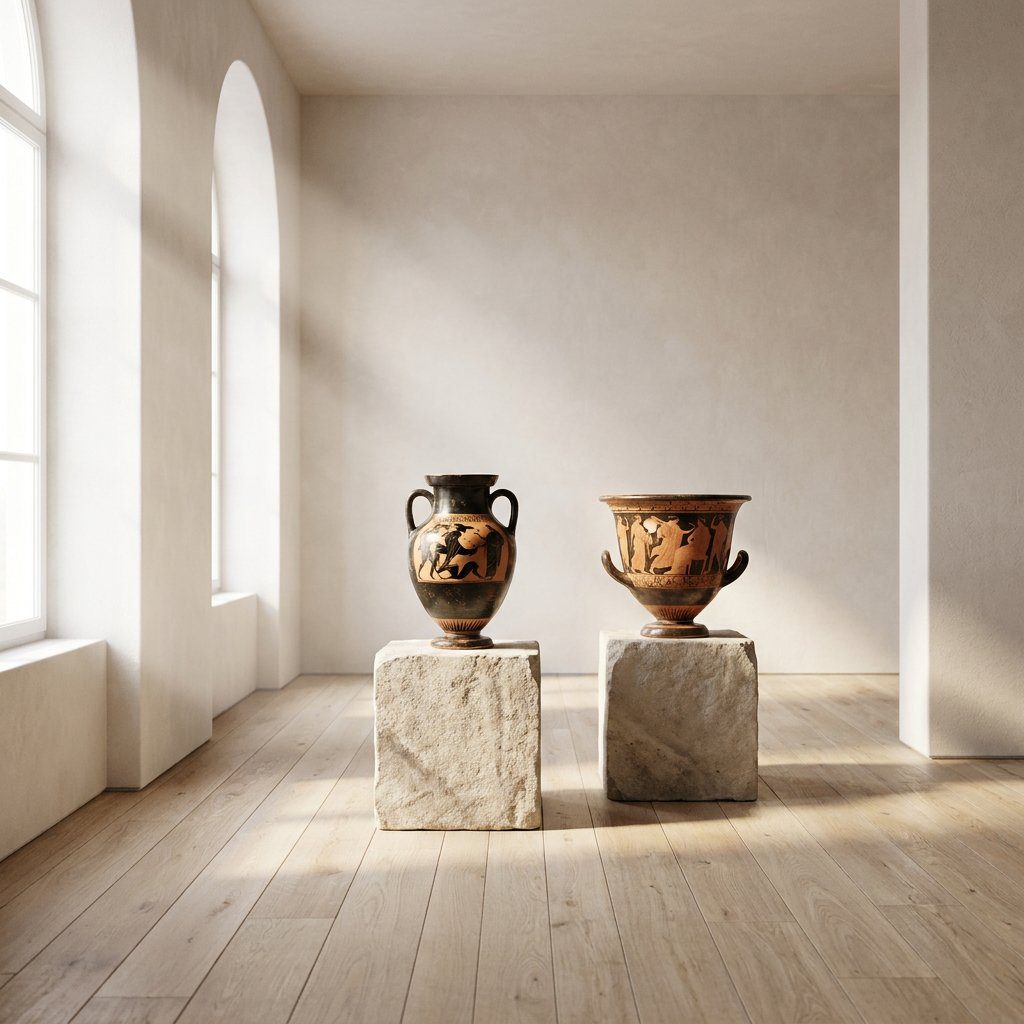
Placement makes or breaks a museum replica. Put a Greek vase on a crowded shelf and it disappears. Place it on a simple pedestal with natural light and it becomes the focal point.
In California homes, you have an advantage: abundant natural light. Use it. Position sculptures near windows where daylight can play off the texture and shadows. Greek vases look best on clean surfaces—a console table in an entryway, a floating shelf in a living room, or a pedestal in a hallway. Give them breathing room.
Height matters too. Eye-level placement works for smaller pieces. Larger sculptures can sit lower, especially if they’re in a conversation area where people will view them from a seated position. The goal is to make the piece feel integrated, not staged.
Think about sightlines. When you walk into your home, what do you see first? That’s where a statement piece belongs. A marble bust in an entryway sets the tone. A Greek amphora on a dining room sideboard becomes a conversation starter. A bronze sculpture in a living room anchors the space.
Avoid overcrowding. One museum-quality piece in a room is more effective than three competing for attention. Let the art breathe. Surround it with neutral tones, natural materials, and simple lines. California design is about ease and openness. Your art should enhance that, not fight it.
Lighting is the other half of the equation. If you’re placing a sculpture in a spot without natural light, add a directional fixture. A simple spotlight or picture light can transform how a piece looks. Just avoid harsh overhead lighting that flattens details. You want shadows and dimension.
Pairing Historical Art Replicas with California Design Trends
California interiors in 2026 are moving away from stark minimalism toward warmer, more expressive spaces. That shift creates perfect opportunities for historical art replicas.
Current trends favor one-of-a-kind pieces with traceable origins, natural materials, and designs that feel collected over time rather than bought all at once. A handcrafted Greek vase fits that aesthetic. So does a custom marble sculpture. These aren’t trendy pieces that’ll feel dated in two years. They’re timeless.
Pair a classical bust with California casual elements—organic linen, warm wood tones, neutral walls. The contrast between ancient and modern creates visual interest without feeling forced. A Greek krater looks at home next to mid-century furniture and indoor plants. The key is balance.
Color palettes matter. California design leans heavily on whites, beiges, warm grays, and natural wood. Museum replicas in marble, terracotta, or bronze complement those tones beautifully. If you want a pop of color, choose a Greek vase with traditional black-figure or red-figure painting. The earthiness works with California’s organic aesthetic.
Texture is where historical pieces really shine. Smooth marble against rough linen. Polished bronze next to raw wood. These tactile contrasts add depth to a space in ways that flat art or generic decor can’t match. You’re layering materials the way California designers have been doing for decades.
Don’t be afraid to mix eras. A Roman sculpture can sit comfortably in a room with contemporary art and vintage furniture. California style has always been about eclecticism—blending influences to create something personal. Museum replicas add a layer of cultural history that makes a space feel more curated and less catalog-driven.
And here’s something interior designers know: historical pieces make everything else look better. They elevate the room. A well-placed sculpture or vase gives other elements—your furniture, your textiles, your lighting—more weight and credibility. It’s the anchor that makes the rest of the design feel intentional.
Choosing Museum Replicas That Match Your California Home
Museum replicas aren’t about filling wall space or checking a box. They’re about bringing pieces into your home that you’ll still want to look at ten years from now. Pieces that feel like they belong, not like you’re trying too hard.
The best approach is to start with what moves you. A Greek vase that catches your eye. A marble sculpture that reminds you of a museum visit. A historical piece that connects to something you care about. Then work with artisans who can create it to your exact specifications—size, finish, placement.
California homes have the light, the space, and the design sensibility to make museum-quality art work. You just need pieces that are actually museum-quality. Handcrafted. Historically accurate. Made by people who know what they’re doing.
If you’re ready to explore custom museum replicas for your California home, we create bespoke art that brings history and craftsmanship together. Every piece is made to order, built to last, and designed around your vision.
Article details:
- Published by:
- Museum Replicas
- Published to:
- Last modified:
- March 18, 2026
Share:
Continue learning: