Stamnos
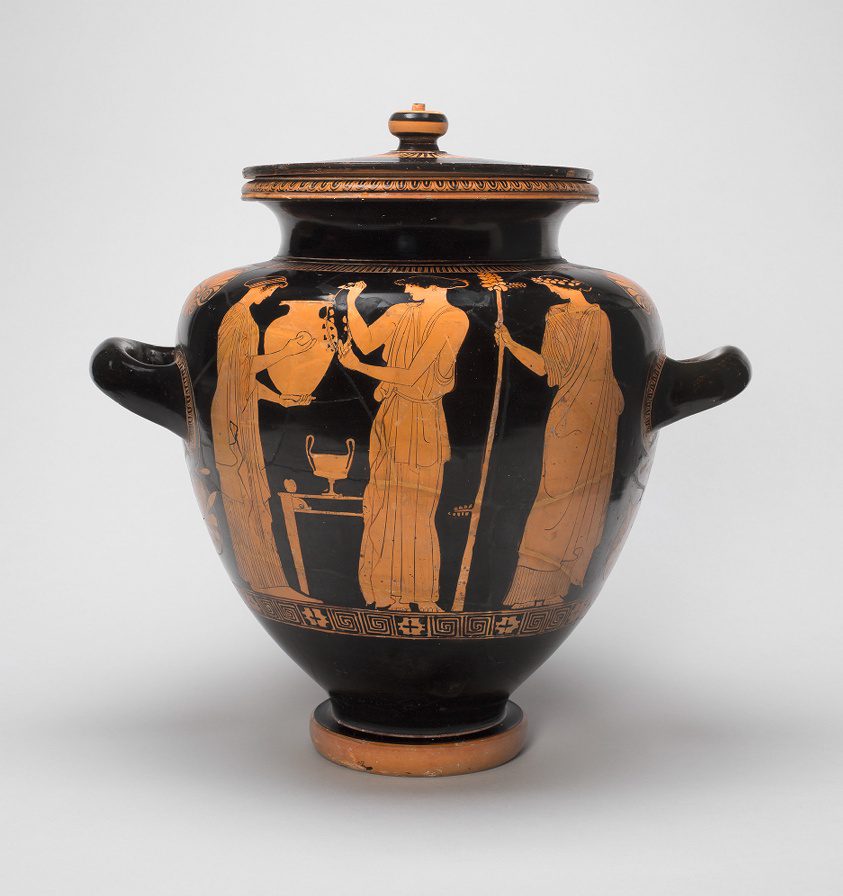
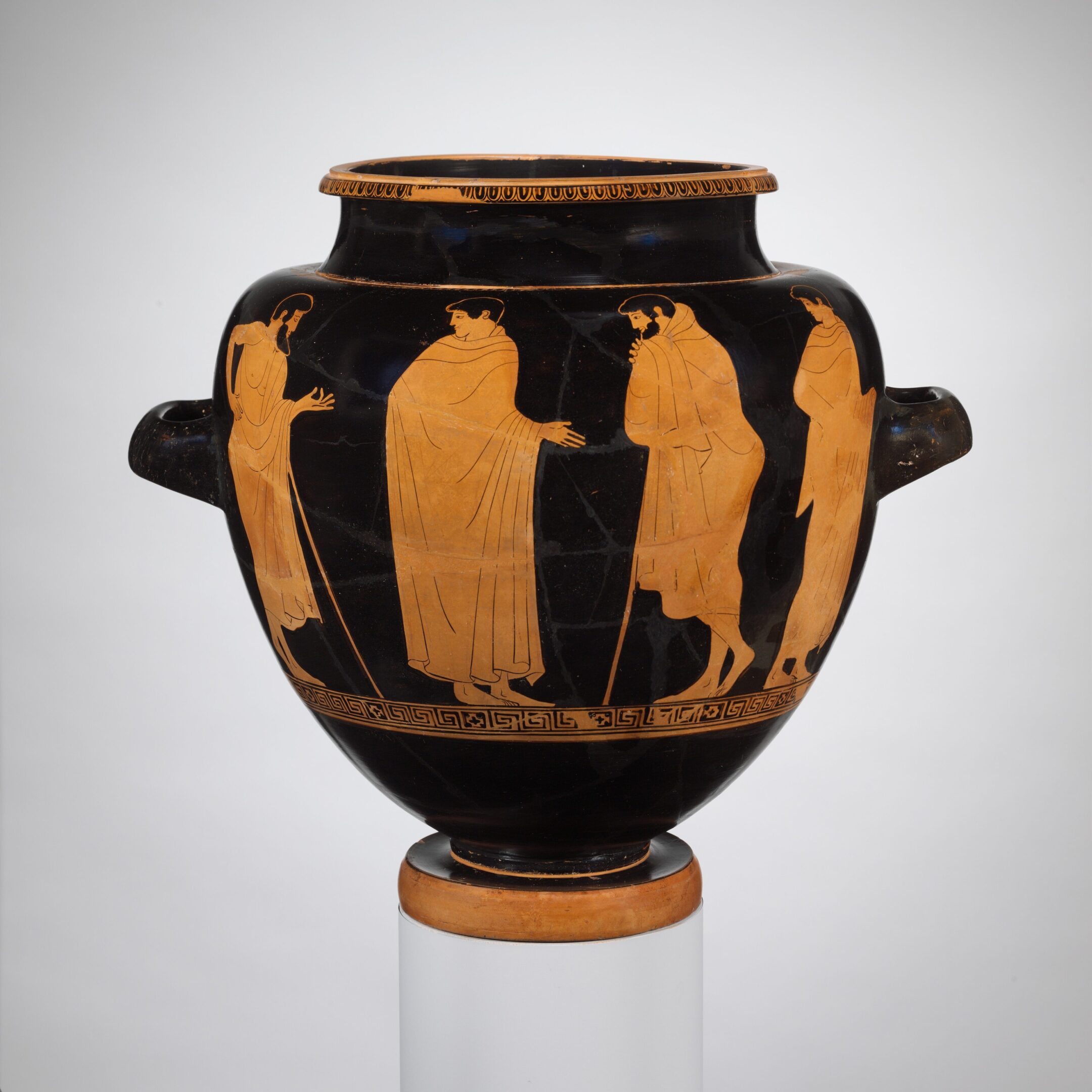
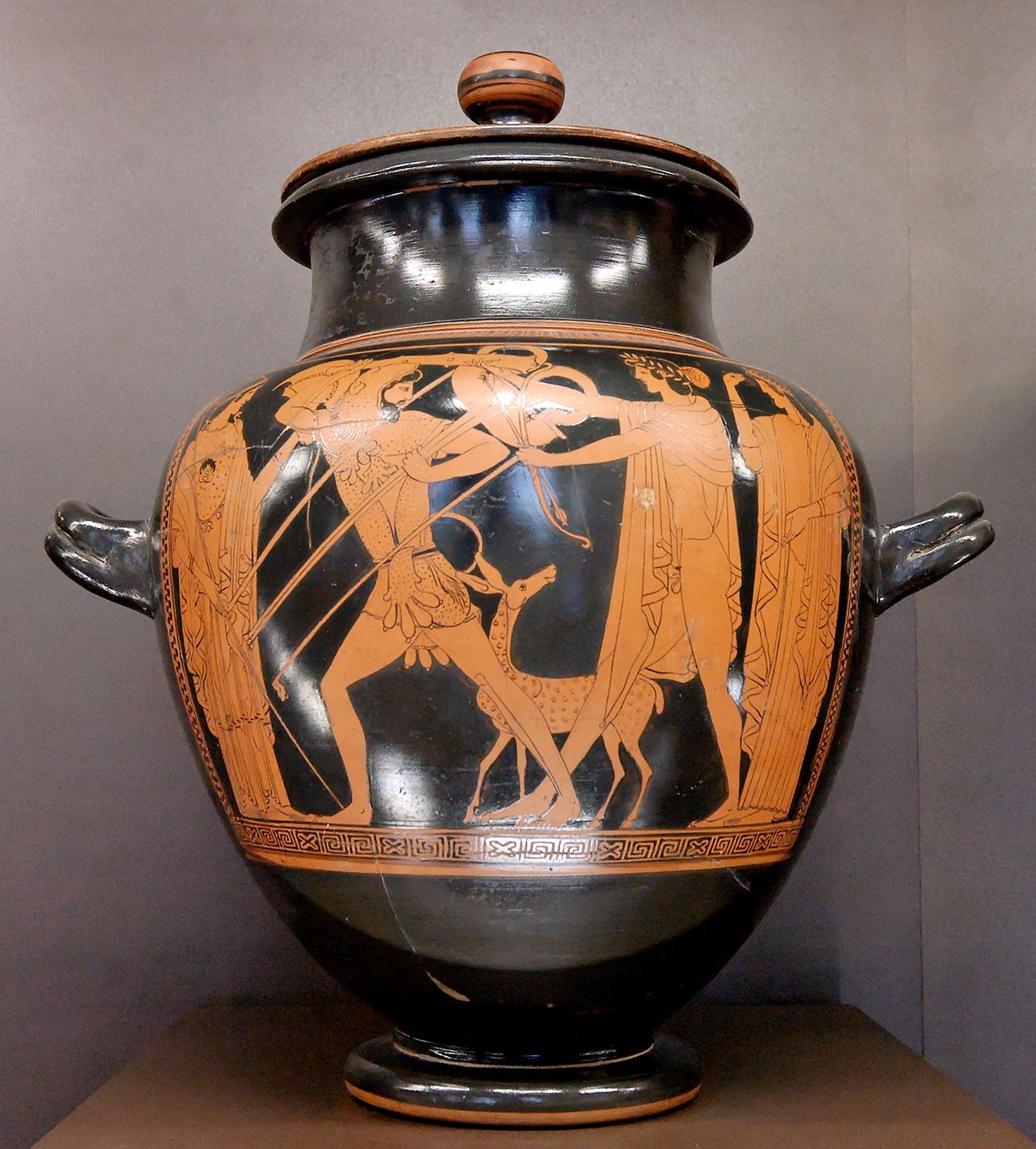
Stamnos is a lidded storage jar for liquids that was standardized during the red-figure period. It has a short, stout neck, a wide, flat rim, and a straight body that tapers to a base. Horizontal handles are attached to the widest part of the jar.
The stamnos was most commonly used to store and mix wine, and its compact, stable form made it well suited for both the symposium and everyday household use. As a product of the red-figure period — roughly the 5th and 4th centuries BC — the stamnos became a favorite surface for Athenian painters, who used its broad, rounded body to showcase narrative scenes from Greek mythology, religious ritual, and daily life. Among the most celebrated subjects were episodes from the labors of Herakles, battles between gods and heroes, and the festive rites of Dionysus. The wide, flat rim was designed to accept a close-fitting lid, keeping the contents sealed and protected. Though less common than the amphora, the stamnos occupies an important place in the history of Greek pottery, and surviving examples are prized by museums and collectors around the world. Handcrafted replicas offer an accessible way to appreciate the artistry and cultural richness of this distinctive ancient vessel.