Bronze sculpture patina
Explore what bronze sculpture patina is and how it shapes color, depth, and character—from warm browns and dramatic blacks to verdigris greens. Learn how artisans create patina, how bronze ages indoors and outdoors, and how to care for finished pieces. Get guidance on choosing the right finish for replicas and commissions.
Share:
What a patina does on bronze
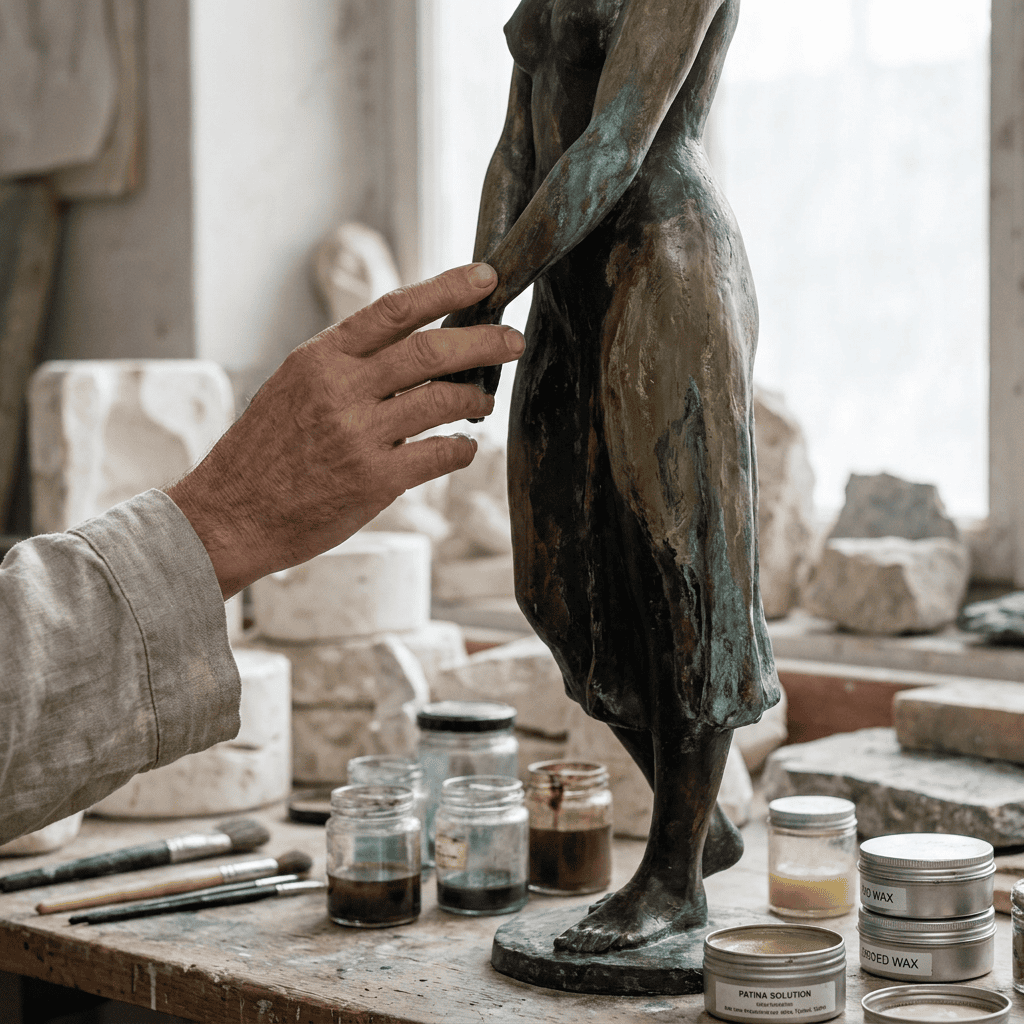
Patina is the thin surface layer that forms on bronze through chemical reaction. On sculpture, that layer may develop naturally over time or be deliberately created by an artisan at the foundry. Either way, it is central to the finished appearance of the work.
Technically, bronze patina can include oxides, sulfides, and carbonates that change the color of the metal. Visually, it adds depth, variation, and softness that bare bronze does not have. Practically, it also helps protect the surface. Bronze does not rust like iron, but it does react to air, moisture, handling, salts, and pollutants. Patina is part of that story.
This is why a bronze patina sculpture looks richer than raw yellow-gold metal alone. The finish creates dimension in recesses and highlights on raised areas, helping details read more clearly from both near and far. It is also why collectors who are drawn to patina statues often describe them as having presence, warmth, and a sense of age.
Natural aging and applied patinas
There are two main ways bronze acquires its color. The first is natural patination, which happens gradually as the metal reacts to its environment. The second is an applied patina, created intentionally by the sculptor or foundry to achieve a controlled result.
Natural patina is slow and unpredictable. A sculpture left outdoors may darken from bright bronze to brown, then move toward olive or green depending on humidity, pollution, salt exposure, and time. Indoor bronze usually changes more gently, often staying within the brown range for much longer. High-touch areas may even become brighter as the surface is lightly polished through handling.
Applied patina is the standard finish for most bronze sculpture. It is not a lesser or artificial shortcut. It is the traditional way artisans give the sculpture a stable, intentional color from the beginning. This matters because raw bronze can oxidize unevenly, producing blotchy results that may not suit the design.
Historically, bronze was not always meant to look green. Many sculptures were finished in warm browns, dark browns, blackened tones, or even gilded surfaces. If you are choosing a bronze statue patina today, the right finish depends less on a single “correct” color and more on the artistic period, the subject, and where the piece will live.
Common bronze patina colors and finish styles
Patina color is influenced by the bronze alloy, surface preparation, heat, chemical solutions, waxing, and the environment in which the sculpture will be displayed. A bronze patina sculpture with a dark brown finish feels very different from the same form in verdigris green, even when the casting is identical.
| Patina style | Typical appearance | How it is usually achieved | Where it works especially well |
|---|---|---|---|
| Warm brown | Classic museum bronze with gentle highlights and depth | Layered brown chemistry, heat, and wax finishing | Traditional interiors, libraries, studies, and figurative replicas |
| Dark brown to black | Dramatic, elegant, and high-contrast | Sulfur-based darkening and repeated tonal building | Monumental forms, contemporary rooms, and strong silhouettes |
| Reddish brown | Coppery warmth with lively tonal variation | Often associated with ferric nitrate and related layered formulas | Warm stone or wood interiors and sculptures with expressive modeling |
| Olive or green-brown | Subtle aged effect with historical character | Controlled oxidation and mixed brown-green layering | Classical replicas and rooms seeking an antiqued look |
| Blue-green or verdigris | Weathered, atmospheric, and archaeological in feeling | Green-oriented chemistry or long outdoor exposure over time | Garden pieces, courtyards, and statement sculptures with age |
| Highlighted finish | Darker base with lighter raised details | Selective rubbing, polishing, waxing, or layered finishing | Decorative works where detail and texture should catch the light |
To see how finish decisions translate on period pieces, our Art Deco bronze sculpture reproductions guide covers typical patinas and finishes for that era.
Does cold cast bronze patina like solid bronze?
Not in the same way. A cold cast bronze patina usually sits on a resin-based object that contains bronze powder, rather than on a fully cast bronze sculpture. It can look convincing, especially from a distance, but it will not develop the same deep chemical surface changes as solid bronze. If long-term aging, authenticity of material, and foundry-style patination matter to you, solid bronze offers a different experience from cold cast bronze. For a detailed side-by-side overview, see cold-cast vs foundry bronze patina.
How artisans create a bronze patina
Professional patination combines chemistry, heat control, surface preparation, and artistic judgment. The process usually begins after casting, chasing, and cleaning are complete. If you want to understand the upstream steps that influence patina outcomes, consider how casting, chasing, and surface preparation set the stage before patination.
The bronze is often heated so the chemical solutions react more effectively with the surface. Artisans may brush, spray, sponge, or mist the bronze with carefully chosen formulas, building the finish in thin layers. Different compounds encourage different color families. Sulfur-based solutions can move the surface toward dark brown or black, ferric nitrate is often used for warm reds and browns, and copper-based nitrate formulas may push the bronze toward green or blue-green tones.
The final color rarely comes from a single application. A refined bronze sculpture patina is often layered, adjusted, softened, or selectively rubbed back. Highlights can be polished to catch the light, while recesses are left deeper and darker to emphasize form. Some finishes combine true foundry patina with toned waxes or clear protective coatings to fine-tune the result.
This is why two sculptures made from the same model can still look distinct. Alloy composition, temperature, humidity, application sequence, and hand-finishing all matter. Patina is part technical process and part artistic interpretation, which is why the best results come from experienced craftspeople rather than quick, improvised DIY methods.
How bronze changes color over time
Fresh bronze begins with a bright yellow-gold tone. Left unprotected, it usually darkens first into tan or brown shades. With more exposure, especially outdoors, it may continue toward deeper brown, olive, and eventually green surface tones. The exact path depends on moisture, air quality, salts, temperature swings, and whether the sculpture is waxed or lacquered.
Indoors, change tends to be slower and more restrained. A bronze figure in a dry interior may stay a rich brown for many years, while high points grow smoother and slightly brighter from dusting or touch. Outdoors, the timeline is much faster. Rain, dew, pollen, pollutants, and coastal salt all accelerate color shift.
If you are wondering how long bronze takes to patina, the answer ranges widely. A naturally weathered patina may take years or even decades to mature. A controlled foundry patina can be created in hours or days, then refined and sealed. That is also the answer to the common question, “How do you patina bronze quickly?” Professionals accelerate the process with heat and chemical reactions. Trying to force that result without the right knowledge can produce streaking, etched surfaces, or unsafe fumes.
For many sculptures, especially refined replicas and interior pieces, leaving bronze completely raw is not ideal. It usually leads to uneven oxidation rather than the balanced, intentional finish most people want.
Caring for a patinated bronze sculpture
A good patina should be preserved, not stripped away. One of the most common mistakes is treating bronze like household metal and polishing it back to bright shine. That removes the surface character that gives the sculpture depth and often damages the intended finish.
Indoor bronze care
Indoor bronze is relatively easy to maintain. Dust it with a soft, dry cloth or a very lightly damp microfiber cloth, then dry the surface. Keep it away from abrasive cleaners, metal polish, and harsh sprays. If the sculpture has a waxed finish, occasional professional rewaxing may help refresh the depth of color, especially on frequently handled pieces.
Outdoor bronze care
Outdoor bronze needs more regular attention because the environment is constantly working on the surface. Dirt, bird droppings, sap, standing moisture, and airborne pollutants should not be left in place for long periods. Gentle washing and periodic waxing help protect the finish and keep color development more even.
- Rinse or wash outdoor bronze gently with water and mild soap when buildup appears.
- Use only soft cloths or sponges.
- Consider a museum-grade wax on appropriate waxed finishes once or twice a year, depending on climate and exposure.
- Avoid pressure washing, abrasive pads, metal polishes, and acidic cleaners.
- If you see powdery, bright green spots rather than a stable smooth patina, seek professional advice, as this can signal active corrosion rather than a desirable aged finish.
For valuable pieces or large garden works, a conservator or experienced bronze professional is the best resource for maintenance planning.
Choosing the right finish for a replica or commission
If you are selecting a bronze statue patina for a home, gallery, hotel, or design project, start with the role the sculpture should play in the space and your display goals. Patina affects scale, contrast, and atmosphere as much as color. Dark finishes often make form feel more sculptural and architectural. Warm browns feel traditional and welcoming. Green or verdigris tones suggest age, weather, and outdoor history. If you’re weighing materials for living spaces, see marble vs bronze: which works best for home displays to compare aesthetics and placement.
For museum-inspired reproductions, the most successful results treat patina as part of the sculpture from the beginning, not as a final afterthought. Subject matter also matters. A classical bust, equestrian figure, mythological bronze, or archaeological-style replica may each call for a different balance of warmth, depth, and antiquing.
- Will the sculpture live indoors or outdoors?
- Do you want a clean classical brown or a more aged historic effect?
- Should fine detail stand out, or should the overall silhouette feel bold and quiet?
- What surrounding materials are present, such as marble, wood, iron, or limestone?
- Are you considering solid bronze or a cold cast bronze alternative?
- For famous works, is the reproduction based on public-domain art and handled by a studio that respects intellectual property?
- If the piece is shipping to the US, Canada, or Mexico, have packing and import requirements been considered for its size and material?
For clients exploring museum-quality reproductions, learn about how replicas are crafted to match museum standards. A thoughtfully chosen patina helps a handcrafted reproduction feel integrated with your architecture, lighting, and vision while still honoring the historical spirit of the original work.
Frequently asked questions about bronze patina
Can bronze be patinated?
Yes. In fact, most finished bronze sculpture is intentionally patinated. Artisans use controlled heat, chemistry, and surface finishing to create specific colors and tonal depth, then protect the result with wax or another suitable coating.
What color does bronze turn when it tarnishes?
Bronze usually shifts from bright yellow-gold to brown first. With more time and outdoor exposure, it can move toward dark brown, olive, or green. The final color depends on humidity, pollution, salt, and whether the sculpture is indoors or outside.
How long does it take bronze to patina naturally?
There is no single timeline. Indoors, visible change may be slow and subtle over many years. Outdoors, noticeable darkening can happen much sooner, while a mature green patina may take years or decades depending on the environment.
How do professionals patina bronze quickly?
They accelerate the natural reaction with heat and specialized chemical solutions applied in layers. The process is precise and experience-based. Quick DIY attempts often lead to uneven color or surface damage, so professional handling is strongly preferred.
Is green patina on bronze good or bad?
It can be either. A stable green patina is often desirable and historically beautiful, especially on outdoor sculpture. But powdery, active, or unusually bright green spots may indicate damaging corrosion that should be assessed by a professional.
Does cold cast bronze age the same way as solid bronze?
No. Cold cast bronze can imitate the look of bronze, but it does not react as a full bronze casting does. Its finish may wear or discolor differently, while solid bronze develops a true metal patina over time.
Should you polish bronze back to bright metal?
Usually no. Polishing removes the intended patina and can permanently change the character of the sculpture. Most bronze should be cleaned gently and maintained in a way that preserves the original finish rather than stripping it away.
Article details:
- Published by:
- Museum Replicas
- Published to:
- Last modified:
- September 14, 2026
Share:
Continue learning: