Reproduction Art Deco Bronze Sculpture
Reproduction Art Deco bronze sculptures capture the era’s geometry, movement, and refined finish without the scarcity or fragility of originals. Look for genuine bronze casting, crisp workmanship, and finishes that suit your space.
Share:
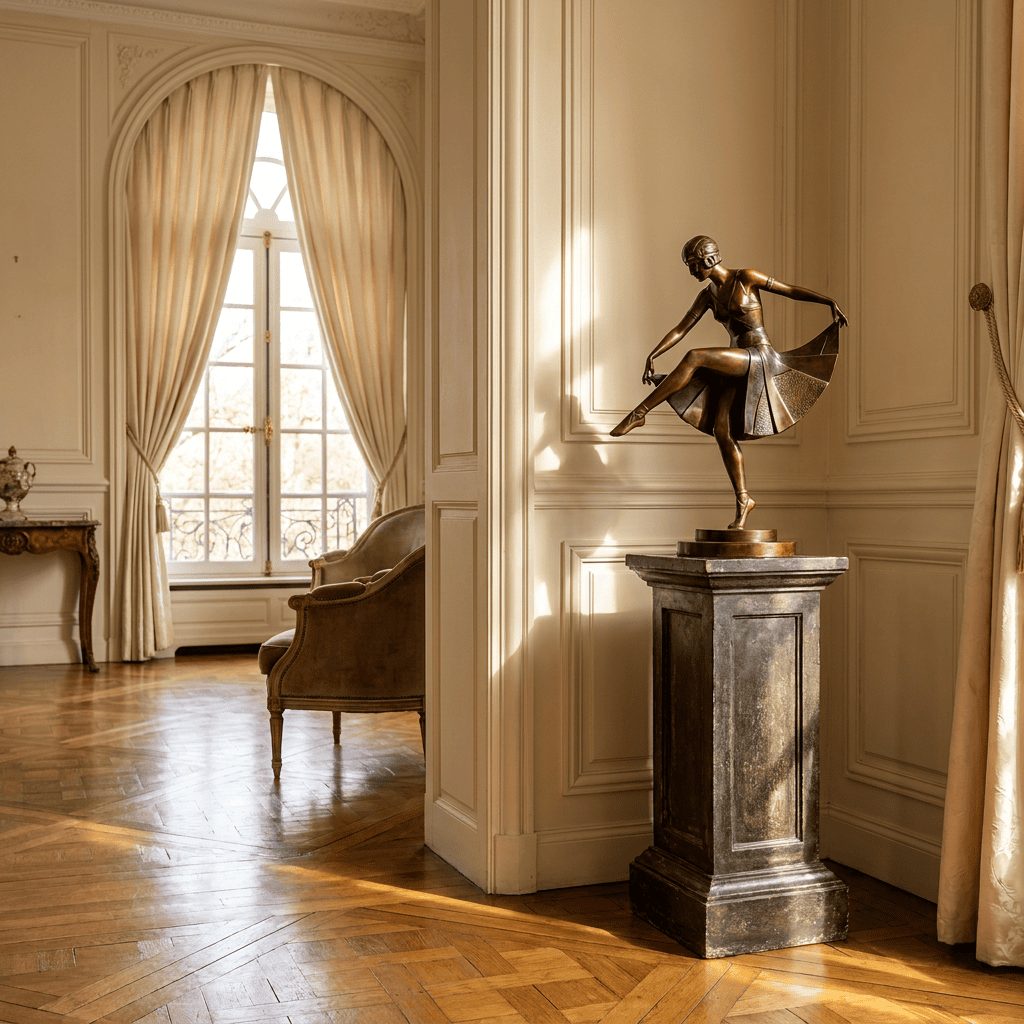
How to recognize true Art Deco character
Art Deco sculpture is defined by elegance under control. Unlike the flowing, highly organic lines of Art Nouveau, Deco favors cleaner contours, stylized anatomy, and a strong sense of balance. Figures often appear elongated, poised, and rhythmic. Drapery becomes graphic, hair is simplified into sculptural lines, and the overall silhouette reads clearly from a distance. Even when the subject is sensual, the result feels disciplined rather than soft.
In bronze sculpture, Art Deco also expresses the period’s fascination with luxury and modernity. Stepped or polished stone bases, dark or nuanced patinas, and precise finishing all contribute to that effect. A successful reproduction should capture this balance between motion and structure. If the pose feels stiff, the surface looks muddy, or the base seems generic, the piece may reference the era without truly embodying Art Deco design.
The subjects and sculptors collectors look for most
Iconic Art Deco motifs in bronze
Female dancers remain the most recognizable Art Deco bronze subject, and for good reason. They combine theatrical movement, fashion, and the modern confidence associated with the interwar years. Hoop dancers, scarf dancers, huntresses, athletes, and elegant nudes all appear frequently. Another classic Deco image is the woman accompanied by a borzoi or greyhound, a pairing that emphasizes speed, refinement, and elongated line.
Animal subjects are equally important. Panthers, gazelles, horses, birds, and stylized wildlife fit the Deco love of silhouette and streamlined energy. Some sculptures lean toward pure glamour, while others express the machine-age side of Art Deco through tension, speed, and sculptural economy. When choosing a reproduction, subject matter matters less than execution. A familiar theme only works when the movement feels convincing and the composition looks resolved from every angle.
Sculptors who shaped the look of the category
Demetre Chiparus is the name most often associated with Art Deco figural sculpture. His dancers and theatrical compositions set a standard for grace, costume detail, and stage-like presence that still defines the category today. Ferdinand Preiss is equally important for his polished modeling, athletic elegance, and refined handling of the figure. Josef Lorenzl pushed elongation and line even further, producing figures with remarkable visual lift and poise.
Claire Colinet and Pierre Le Faguays are also central references, especially for dance subjects and expressive drapery. Bruno Zach brought a more playful and sometimes provocative character to Deco bronze figures, showing that the movement was not limited to one mood. Knowing these artists is useful because they establish the benchmark that buyers still use when judging a reproduction. A strong modern piece should echo the qualities that made these works memorable: sharp casting, theatrical stance, balanced proportion, and a luxurious sense of finish.
Original bronze, period spelter, or modern reproduction?
One of the most useful things to understand is that not every Art Deco figure was made in bronze. Many period sculptures were produced in spelter, a zinc-based alloy that allowed decorative figures to be made at lower cost. That makes material identification essential when you are buying for quality, longevity, or collecting value.
| Type | Typical signs | What it means for a buyer |
|---|---|---|
| Original Art Deco bronze | Usually dates to the 1920s or 1930s, feels dense for its size, may show artist or foundry marks, and often has natural age wear with good crispness in detail | Best for collectors seeking period ownership and long-term historical value |
| Period spelter figure | Often lighter in weight, more brittle, commonly finished with paint or imitation patina, and may reveal dull gray metal at chips or worn edges | Offers authentic period style, but usually with less durability and lower material value than bronze |
| Modern bronze reproduction | Contemporary casting sold transparently as a reproduction, often with a cleaner underside, fresh but nuanced patina, and more flexibility in size or finish | Ideal for buyers who want Deco elegance, availability, and custom options without competing for scarce originals |
If you are wondering how to tell if something is spelter, start with weight, wear points, and detail. Spelter is usually lighter than bronze of similar dimensions and often shows gray metal where the surface finish has chipped. Bronze typically feels denser and may reveal warmer brown or golden undertones at naturally worn edges. Fine fingers, facial planes, and costume textures also tend to hold up better in quality bronze castings. No single clue is decisive, so ask for close photographs of the surface, the underside, and any signatures or foundry marks before making a decision.
How a quality bronze reproduction is made
Research and model preparation
A museum-quality reproduction starts with careful study of a public-domain original or historical reference. The proportions, gesture, and base design must be understood before casting begins. At the high end, this stage is about interpretation with respect, not generic imitation. The goal is to preserve the original sculpture’s character while making a work that reads beautifully in a contemporary interior.
Lost-wax casting and hand finishing
Lost-wax casting remains the benchmark for refined bronze reproduction. A model is translated into wax, encased in a mold, and then cast in molten bronze after the wax is removed. Once cooled, the bronze is chased by hand. That means seams are cleaned, details are sharpened, and transitions are refined so the piece does not look blunt or factory-made. Good chasing is one of the clearest differences between artisan bronze and decorative mass production. For a step-by-step look at casting, scaling, and patination that’s broadly applicable to Deco works, see our Bronco Buster reproduction guide.
Patina, mounting, and customization
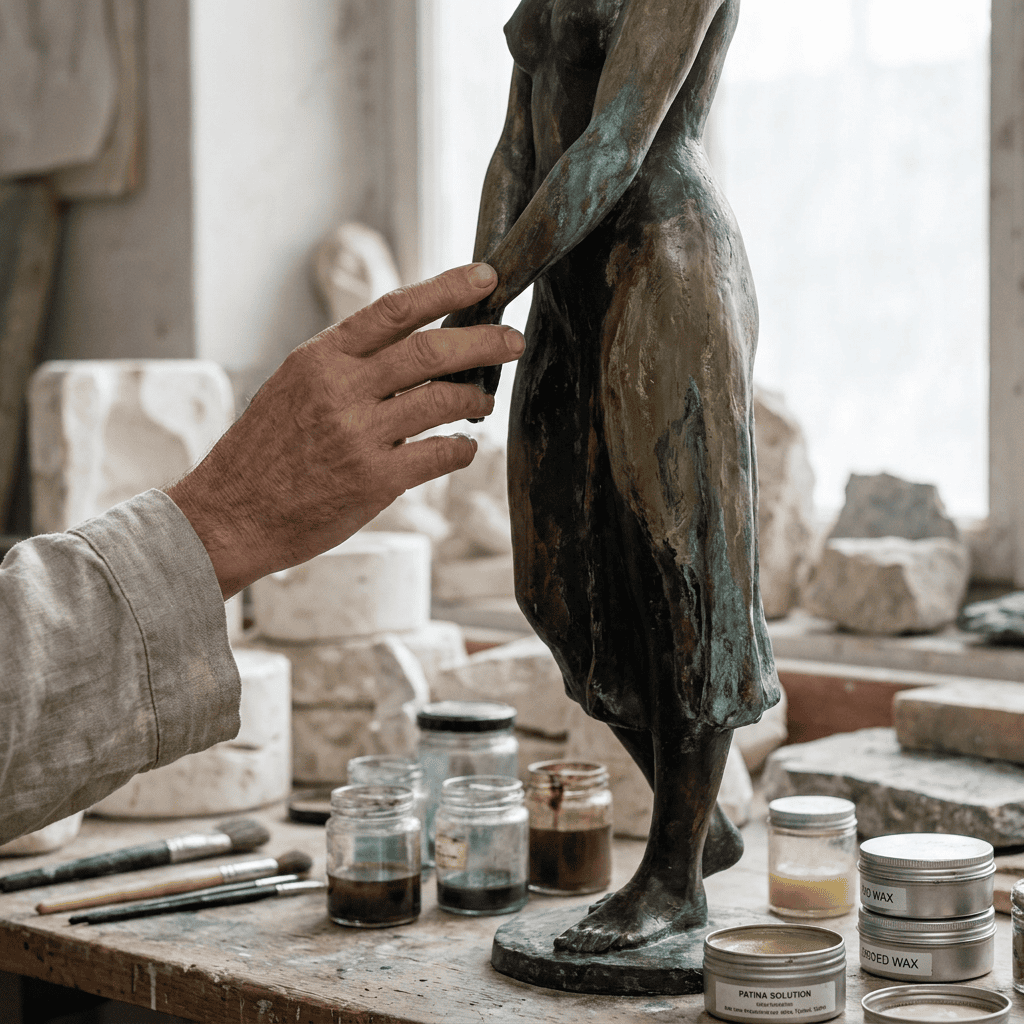
After the metalwork is resolved, artisans apply patina through heat and chemical reactions that create depth and tone in the surface. The figure may then be mounted on marble, onyx, or another stone base suited to the composition. For a made-to-order piece, scale, finish intensity, and presentation can often be adjusted. Museum Replicas specializes in handcrafted museum-quality reproductions, so custom sizing and tailored presentation are part of the process, provided the result continues to respect the artwork’s original spirit and public-domain status. If you are weighing material and finish options, compare the cold-cast vs foundry bronze patina to understand differences in look and longevity.
How to judge craftsmanship before you buy
Three checkpoints that reveal quality
Modeling and proportions
The silhouette should flow naturally. Look for tension through the torso, believable placement of hands and feet, and a pose that feels balanced rather than awkward. Weak reproductions often fail here first, with stiff limbs or anatomy that looks flattened.
Surface clarity and chasing
Hair, drapery, fingers, and facial features should be distinct without appearing harsh. Seams should not distract from the form. If the detail looks soft or smeared, the finishing work was likely rushed.
Patina and base quality
A refined patina has tonal variation and visual depth. It should not read as a single sprayed brown. The base should feel proportionate to the figure, sit level, and support the sculpture as part of the composition rather than as an afterthought.
Care and cleaning for bronze sculptures
Bronze is durable, but most avoidable damage comes from overcleaning. For indoor Art Deco sculptures, gentle dusting is usually enough. Use a soft, dry cloth or a very soft brush to lift dust from folds, hair, and textured areas. If the sculpture has a waxed or lacquered finish, aggressive cleaning can remove the protective layer and alter the intended color.
- Avoid vinegar, ammonia, bleach, lemon juice, and abrasive household cleaners.
- Avoid metal polishes designed to create a bright shine, since they can strip away the patina that gives the sculpture its character.
- Avoid scouring pads, stiff brushes, and excessive moisture around marble or onyx bases.
If a bronze needs more than dusting, use the mildest approach possible and test nothing abrasive on the visible surface. For wax maintenance, a light museum-grade wax may be appropriate, but only if the finish allows for it. If you see active corrosion, flaking finish, or instability where the figure meets the base, professional conservation advice is the safer choice. For placement and lighting ideas that protect the work and elevate presentation, explore ways to display museum replicas in homes, offices, and galleries.
Commissioning a custom Art Deco bronze reproduction
A custom reproduction is often the best option when you love a historic Art Deco model but need a different scale, base, or finish for your interior. Designers may want a taller version for a niche or console, while private collectors may prefer a more intimate size for a library or study. Museum Replicas, based in Okemos, Michigan, creates handcrafted reproductions tailored to private residences, hospitality projects, and design commissions. The company works only with public-domain artworks and plans projects with copyright, shipping, and import considerations in mind for clients in the US, Canada, and Mexico. Sharing room dimensions, viewing distance, and lighting conditions at the start leads to a stronger final result.
FAQ
What is an Art Deco sculpture?
An Art Deco sculpture is a work shaped by the design language of the 1920s and 1930s: streamlined form, geometric control, elegant movement, and luxurious presentation. In bronze, that often means dancers, athletes, graceful nudes, animals, or other subjects with strong silhouette and poise.
Are bronze sculptures worth anything?
Yes, but value depends on authorship, age, casting quality, condition, rarity, and whether the work is an original, a period cast, or a modern reproduction. A reproduction should be valued for craftsmanship, beauty, and suitability for your space rather than as an original period investment object.
How can I tell if a figure is spelter or bronze?
Check the weight, the wear points, and the sharpness of the detail. Spelter is typically lighter and may show dull gray metal at chips or abrasions. Bronze feels denser and usually carries a richer surface depth. If you are unsure, request detailed images of the underside, attachment points, and any marks.
What should you never use on bronze?
Do not use vinegar, ammonia, bleach, acidic homemade cleaners, abrasive powders, or wire brushes. These can strip patina, damage protective coatings, and permanently alter the finish. Gentle dusting and careful maintenance are far safer than aggressive polishing.
Are reproduction Art Deco sculptures legal?
Yes, when they reproduce public-domain works and are sold transparently as reproductions. Respect for intellectual property, clear attribution, and compliance with shipping and import requirements are all part of responsible production and sale.
Can a reproduction be made in a custom size or finish?
Often yes. Custom scale, patina tone, and base selection are common requests, especially for interior design projects. A good maker will explain what can be changed while preserving the balance, proportions, and visual character of the original artwork.
Can bronze reproductions be shipped to Canada or Mexico?
Yes, but cross-border delivery requires proper packing, declared values, and attention to import rules. Reputable studios account for those requirements early so the sculpture arrives safely and the paperwork matches the nature of the piece.
If you have a specific public-domain Art Deco model in mind, Museum Replicas can help translate it into a handcrafted bronze sculpture designed for your home, collection, or project vision.
Article details:
- Published by:
- Museum Replicas
- Published to:
- Last modified:
- September 14, 2026
Share:
Continue learning: