Cold cast bronze patina
A cold cast bronze patina can look remarkably convincing when prepared correctly. The key is exposing enough real bronze at the surface so patina chemicals can react. Properly opened metal yields deep browns, warm highlights, and aged green tones in a lightweight, interior-friendly piece.
Share:
Why the surface reacts like real bronze
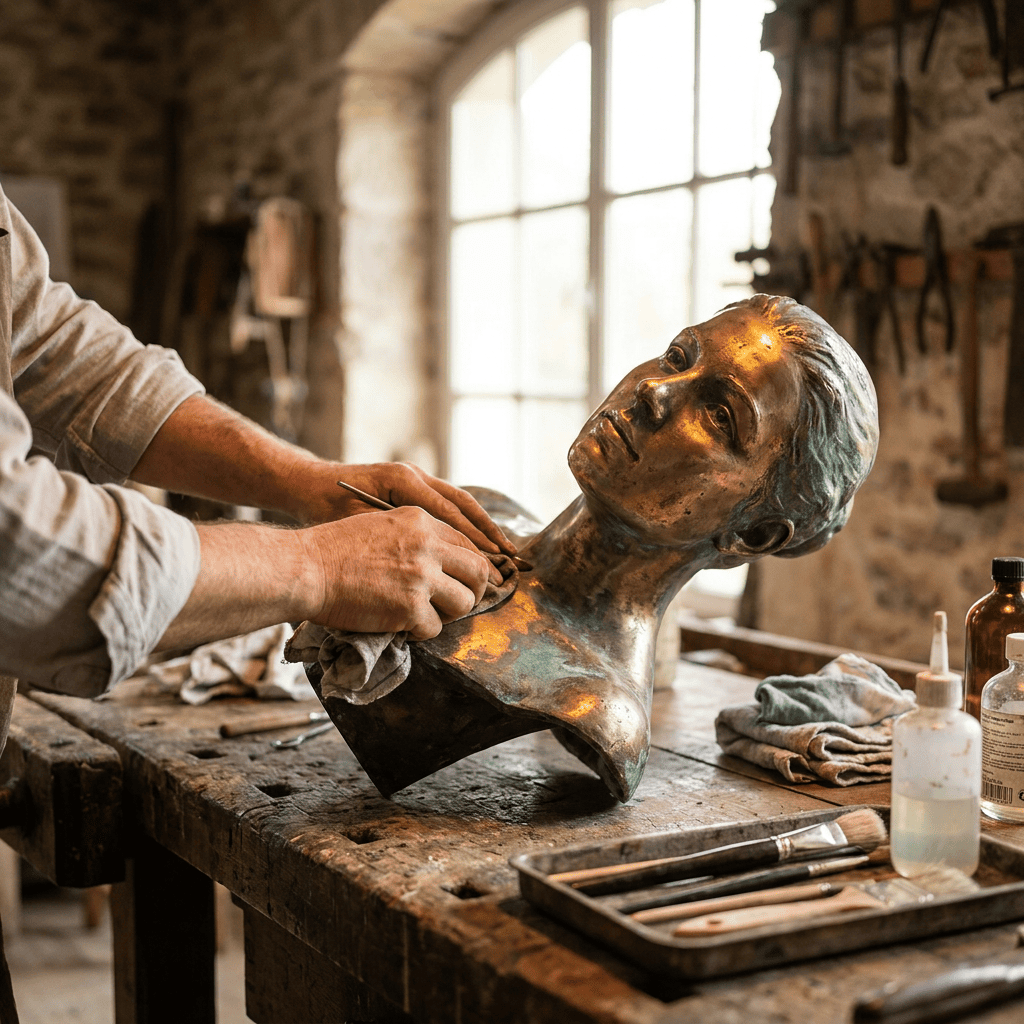
Cold cast bronze is not solid metal. It is usually resin combined with fine bronze powder, often with a bronze-rich outer layer. After demolding, a thin film of resin may still sit over the metal particles, so the piece is sanded, burnished, or polished until the bronze is exposed. At that point, the patina reacts with real metal at the surface rather than with the resin behind it. The stronger the metal presence on that outer skin, the more natural and even the result tends to be. This is why bronze dusting and well-made surface coats usually patinate better than resin-heavy finishes.
Applying patina to a cold cast bronze finish
The workflow is close to traditional bronze finishing, but with one important limitation: cold cast pieces should use cold patina products, not heat-based patinas that can damage the resin support.
Expose the bronze
Start by removing the surface haze with fine abrasive pads or 0000 steel wool. Work slowly on raised details and edges. When the piece shifts from looking slightly plasticky to clearly metallic, you have reached the bronze-rich layer. If you stop too early, the patina may appear weak or patchy.
Clean the surface thoroughly
Before applying any patina, remove dust, oils, and fingerprints. A chemically clean surface gives more even color and reduces blotches. Gloves, clean cloths, and the recommended cleaner or solvent for your patina system make a visible difference, especially on smooth areas where streaks are easy to see.
Build the color in stages
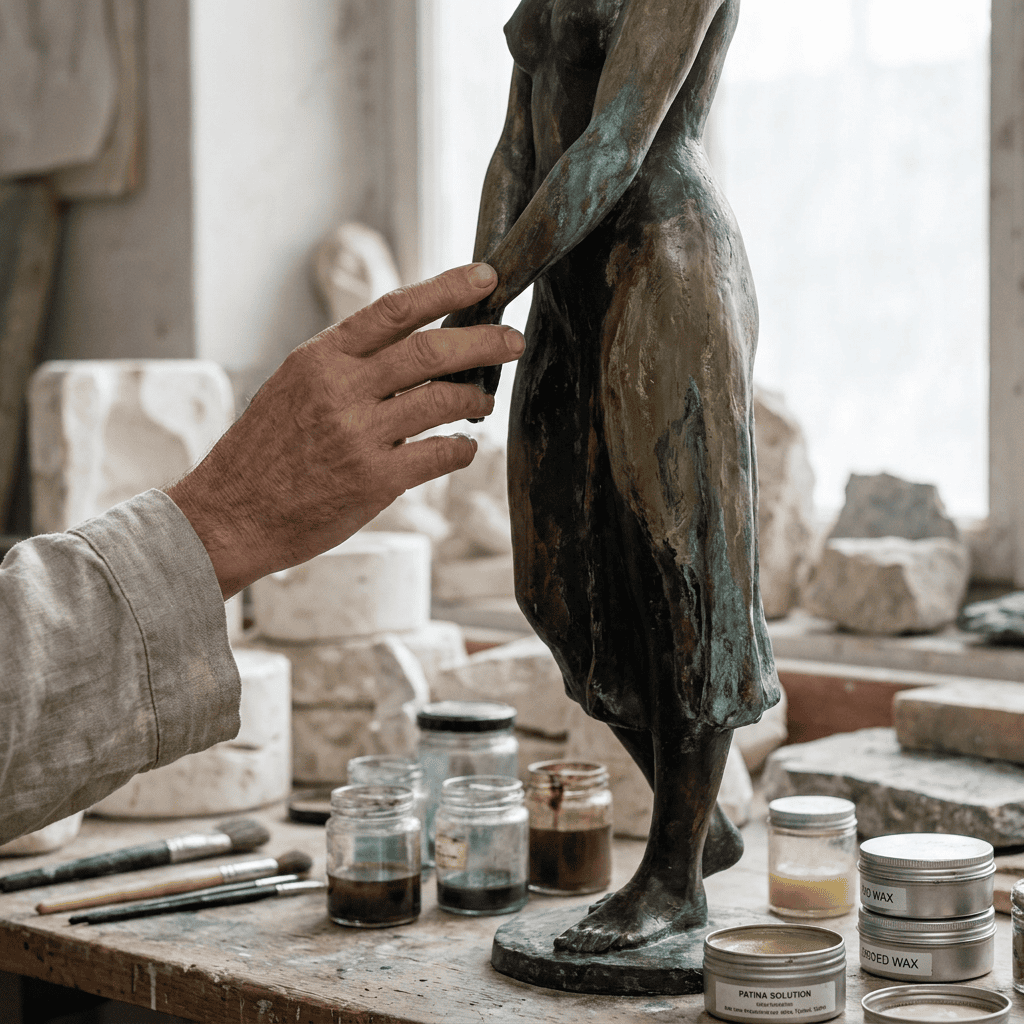
Many finishers begin with a darker base, often with liver of sulfur, then add secondary tones as needed. Apply light coats, let the reaction develop, rinse or neutralize if required, and repeat gradually. It is far easier to deepen color than to reverse an overly aggressive patina, so testing on a sample or an inconspicuous area is wise.
Create depth and highlights
Once the color has developed, selectively buff the high points to reveal brighter bronze beneath. That contrast gives cold cast bronze much of its realism. Recesses stay darker, edges catch the light, and the sculpture gains the visual depth people associate with aged metal rather than painted resin.
Cold cast bronze and foundry bronze compared
Foundry bronze is solid metal throughout, so it can be repatinated more aggressively and generally tolerates outdoor exposure better. Cold cast bronze relies on a metal-rich surface over a resin body, which means weight is lower and the finish must be handled with more care during sanding and later maintenance. Visually, a well-finished cold cast piece can come surprisingly close to foundry bronze in indoor settings. When evaluating a piece crafted to match museum standards, ask how much bronze is present at the surface, how it was burnished, and whether the final finish was waxed or lacquered.
Sealing and caring for the finish
Unsealed patina continues to react, fade, or pick up oils from handling, so protection matters. Clear lacquer gives the most stable barrier and is often the better choice for frequently touched pieces or display areas with more humidity. Wax usually produces a softer, more traditional look, but it wears faster and may need occasional renewal. Some professional finishes use lacquer first and wax second for extra depth. For broader material context and long-term appearance, see our guide to marble vs bronze sculpture. For long life, keep cold cast bronze indoors, dust it gently, and avoid abrasive cleaners. The patina itself can last for many years, while the topcoat is the part that normally needs maintenance.
Common questions about patinated cold cast bronze
Is cold cast bronze real bronze?
It contains real bronze powder, but it is not solid bronze throughout. The patina forms because the surface includes actual metal particles, while the resin core provides structure and keeps the piece lighter than a foundry cast.
How long does cold cast bronze last?
Indoors, a well-made cold cast bronze piece can last for decades. Longevity depends less on the resin body than on how well the surface was sealed and how carefully the finish is cleaned and handled over time.
How quickly can bronze patinate?
Natural oxidation can take months or years, but applied cold patinas can work within minutes to hours depending on the product, metal exposure, temperature, and the depth of color you want to build.
Can you use hot patinas on cold cast bronze?
Usually no. Hot patina methods use heat to drive the reaction, and that heat can soften, distort, or damage the resin-based substrate. Cold patina solutions are the safer and more appropriate choice for cold cast work.
Article details:
- Published by:
- Museum Replicas
- Published to:
- Last modified:
- September 11, 2026
Share:
Continue learning: