Ancient Greek lekythos
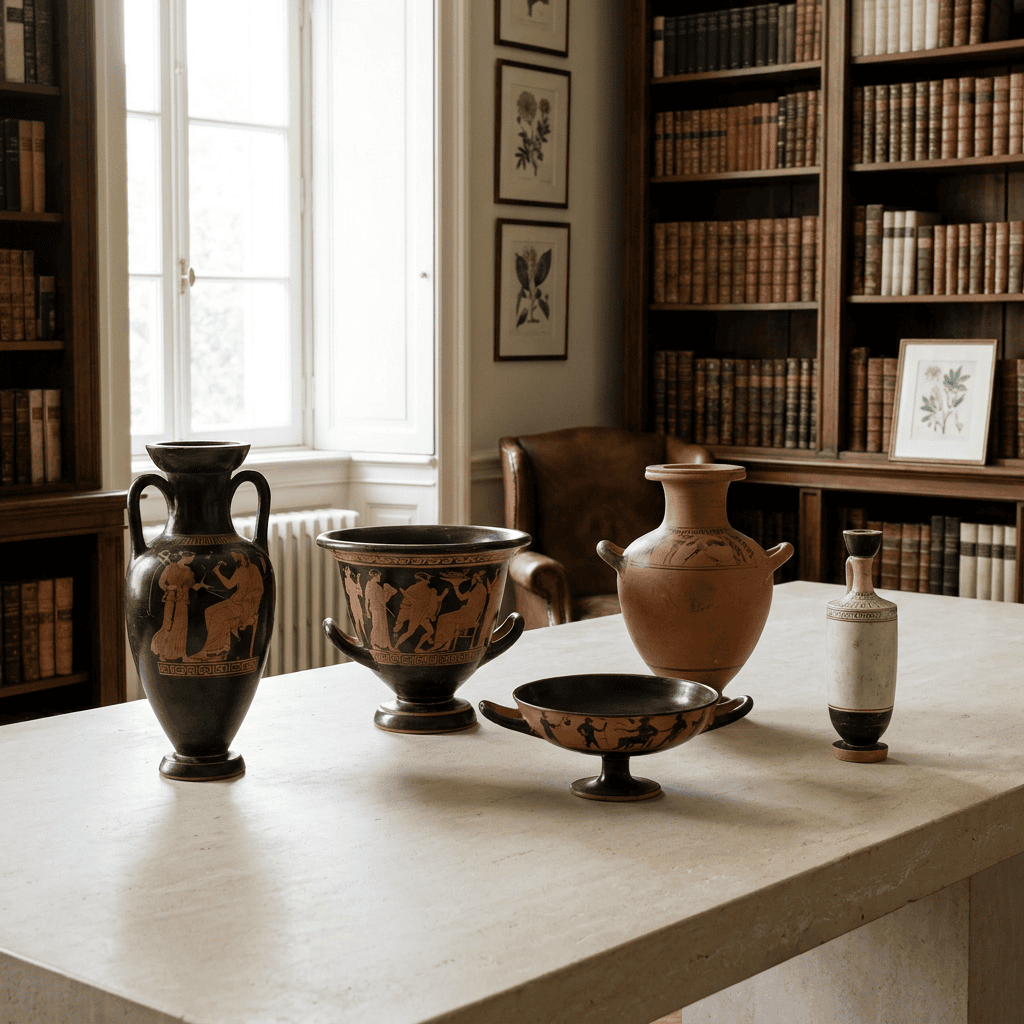
An ancient Greek lekythos is a small terracotta oil flask made to store and pour perfumed oil or ointments. Its elegant, narrow shape was practical in daily life, yet the form also gained strong funerary meaning, especially in Classical Athens. That combination of function, beauty, and symbolism is why the Greek lekythos remains one of the most distinctive forms among Greek vases in ancient pottery.
Share:
At a glance
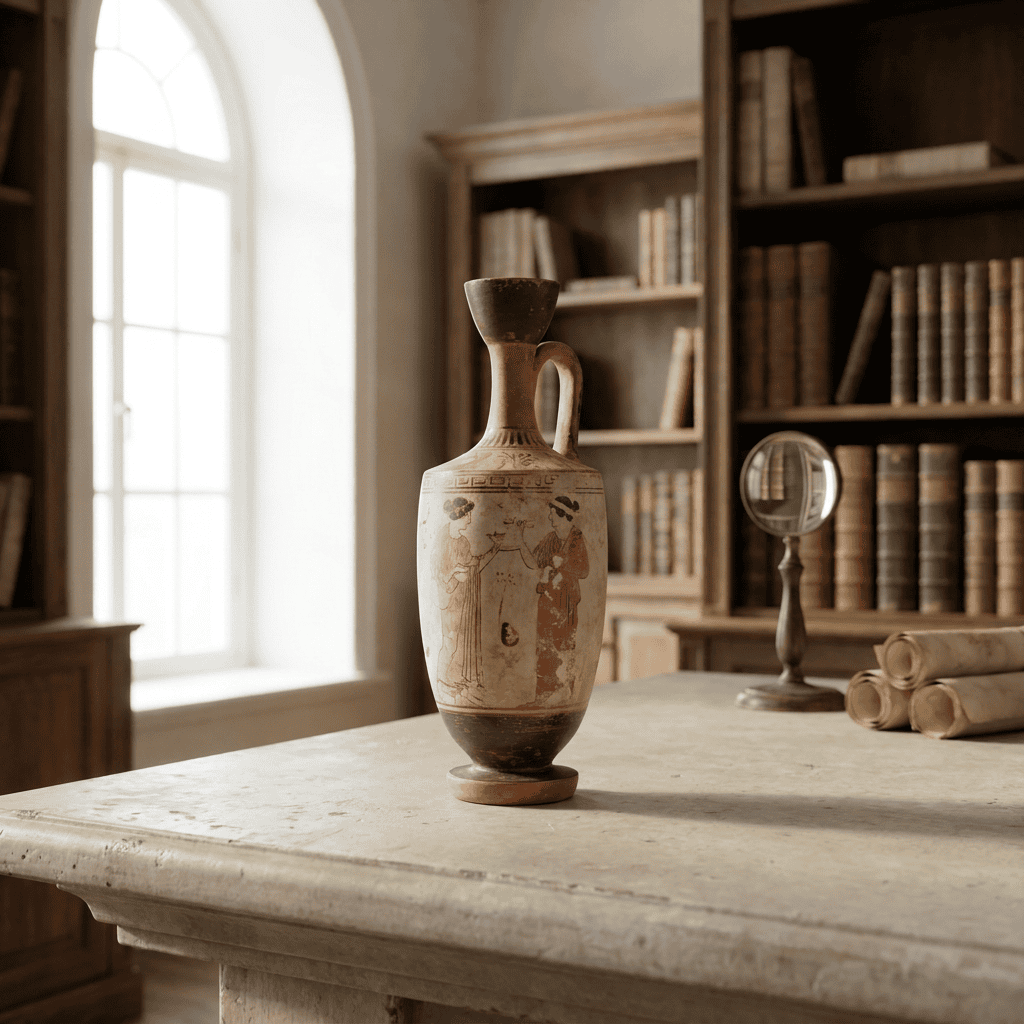
The lekythos, plural lekythoi, was primarily a vessel for oil. In ancient usage, the word could sometimes be used broadly for a small oil container, but art historians usually mean the recognizable vase shape with a slim body, narrow neck, and single handle. Because the mouth is small, oil could be poured in a controlled way, which suited bathing, grooming, athletic use, and ritual offering. Some examples were made for regular handling, while others were created with a more ceremonial purpose.
How to recognize the form
Most lekythoi share a few clear visual traits:
- a slender body, often cylindrical or gently tapering
- a narrow neck and small mouth for careful pouring
- one handle rising from the shoulder to the neck
- a refined silhouette suited to both utility and display
Why it mattered in Greek life
Oil, bathing, and grooming
In everyday settings, a Greek lekythos held precious oils used for skin care, bathing, and athletic preparation. Its shape helped preserve a modest quantity and reduced waste when pouring.
Burial and remembrance
The form is especially famous for its connection to graves. Many white-ground lekythoi have been found in Athenian funerary contexts, where they served as offerings and visual expressions of remembrance. Their imagery often feels quieter and more intimate than that of other vase types.
Painted styles and date range
The type appears around 590 BCE. Early examples are commonly black-figure, and after about 530 BCE some were decorated in red-figure. For background on the painting styles often seen on lekythoi, see black-figure vs red-figure techniques. White-ground lekythoi became particularly important later, valued for their delicate painted scenes. Because the white-ground surface was relatively fragile, these pieces were less suited to heavy everyday use than sturdier black-glazed or red-figure variants.
Collecting the form today
For collectors, designers, and classical art lovers, the lekythos offers a graceful way to bring Greek history into an interior. When choosing a reproduction, look for accurate proportions, a well-shaped neck and handle, and decoration that respects ancient style rather than treating it as generic decor. Museum Replicas creates handcrafted reproductions of public-domain classical forms, tailored in size and finish for homes, collections, and design projects. Learn more about how our replicas are crafted to match museum standards. If you plan to showcase a lekythos, explore practical ways to display museum replicas at home or in an office.
Frequently asked questions
What was the purpose of a lekythos in ancient Greece?
Its main purpose was to hold and pour oil, especially perfumed oil or ointments used in bathing, grooming, athletics, and ritual contexts.
Was every lekythos made for a tomb?
No. Some were practical vessels for daily use, while others, especially white-ground examples, were strongly associated with funerary offerings and burial customs.
Is a lekythos always white-ground?
No. White-ground lekythoi are the most famous, but the type also appears in black-figure, red-figure, and plain black-glazed versions.
How is a lekythos different from an amphora?
An amphora (see our Greek amphora replica guide) is usually larger, broader, and two-handled, designed for storage or transport. A lekythos is smaller, single-handled, and made specifically for controlled pouring of oil.
Article details:
- Published by:
- Museum Replicas
- Published to:
- Last modified:
- September 8, 2026
Share:
Continue learning: