Augustus Bust: History, Style, and Replica Guide
Learn how to recognize an Augustus bust by its distinctive hairstyle, youthful features, and composed expression—and why this idealized image served imperial power. Explore famous finds like the Meroë Head and the Isernia discovery, plus tips for choosing a faithful marble or bronze replica.
Share:
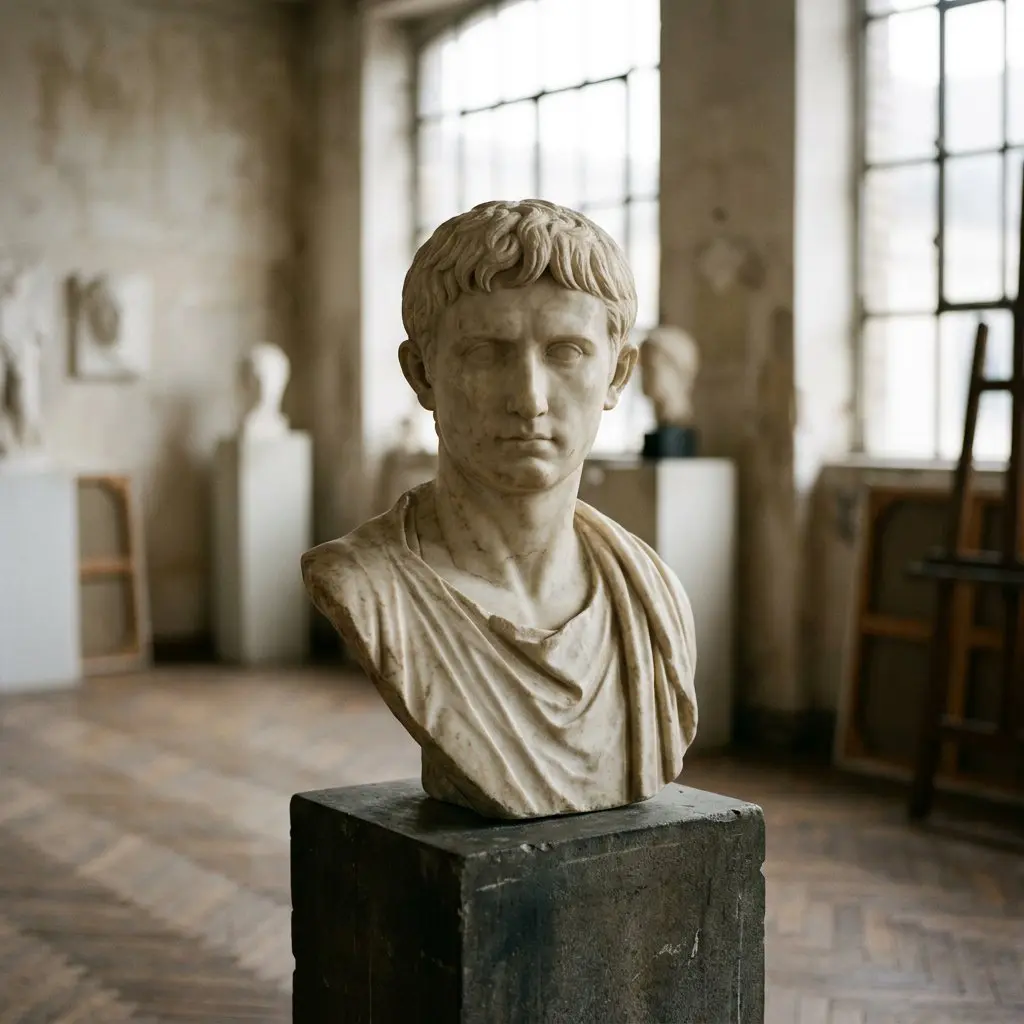
One complication is that search results often mix true busts with detached portrait heads and broken statue fragments. That difference matters before you interpret a piece or choose a reproduction. Famous finds such as the Meroë Head and the Isernia discovery show why: an Augustus portrait can carry politics, archaeology, resistance, and collecting appeal at the same time.
How Augustus Is Recognized in Roman Portraiture
An Augustus Caesar bust is usually identified through a consistent set of portrait markers, above all the distinctive arrangement of locks across the forehead. In established types, those locks form a disciplined pattern often described as fork-and-pincer-like, making the hairstyle one of the strongest clues. The face is equally important: smooth skin, youthful proportions, restrained brows, and a composed mouth create an ideal ruler rather than a strictly realistic likeness. In finer works, subtle neck turn, refined eyes, and balanced modeling reinforce that controlled presence. The Primaporta type is the key reference for understanding why so many portraits of Augustus look closely related. For comparison with another iconic Roman ruler’s portrait features, see the Julius Caesar bust replica guide.
Why His Portraits Remain Youthful, Controlled, and Politically Charged
After defeating Antony and Cleopatra and bringing Egypt into Roman rule, Augustus needed more than recognition; he needed legitimacy. His portraits therefore favor permanence, order, and authority over literal aging. Even as he grew older, the approved image stayed youthful and self-possessed. That choice drew heavily on Classical Greek ideals, which linked balanced proportions and calm expression with noble leadership. Repeated across statues, busts, and coins, the bust of Emperor Augustus became a tool of imperial communication, making his rule visible and consistent across the Roman world.
Bust, Portrait Head, or Full Statue? The Distinction Matters
| Object type | What it includes | Why the label matters |
|---|---|---|
| Bust | Head with neck and part of the chest or shoulders | Best term for a freestanding portrait meant for focused display |
| Portrait head | Head only, often broken at the neck | Common in archaeology; many “Augustus bust” results are actually heads |
| Full statue | Head attached to a complete or largely complete body | Changes interpretation, scale, and replica expectations |
The Meroë Head: When an Imperial Image Became a Political Trophy
The Meroë Head is one of the most striking surviving portraits associated with Augustus. It is a bronze portrait head, not a strict bust, and it originally belonged to an over-life-sized imperial statue. Its finish, idealized features, and elite workmanship suggest a monument intended for a prominent public setting, where the image of Rome’s ruler could project authority at a distance as well as close up.
Its history becomes even more compelling when placed in the politics of the early empire. After Augustus absorbed Egypt into Roman power, Roman control extended into a region already connected to the Kushite kingdom to the south. In that tense frontier world, imperial portraits were not neutral decoration. They stood for conquest, taxation, and the presence of Roman rule itself. The Meroë Head is widely linked to a Kushite raid into Roman-held territory, during which imperial statuary was taken away.
The most memorable part of the story is its later burial beneath temple steps at Meroë. Archaeologists have long read that placement as deliberate rather than accidental. If so, the meaning is powerful: the ruler who expected to be looked up to was instead placed underfoot. That act turns the bust of Caesar Augustus from state image into political trophy. It reminds us that Roman portraiture did not simply broadcast power; it also invited response, defiance, and symbolic reversal.
The Isernia Find: How Archaeologists Read a New Augustus Portrait
The Isernia find shows how identification often begins with fragments and context rather than a complete monument. During restoration work, archaeologists uncovered a weathered marble portrait head and linked it to Augustus through visual evidence rather than inscription alone. The hairstyle was central: the surviving forehead locks fit the familiar Augustan pattern, while the smooth, youthful face recalled the idealizing treatment seen in Primaporta-related portraits.
Context also mattered. Because the head emerged in a built environment shaped by later construction, conservation, and reuse, researchers had to consider how much of the original setting had been lost or altered. That is often the case with Roman portraiture: what survives is shaped not only by antiquity, but by centuries of rebuilding around it.
Beyond identification, the discovery matters for the history of ancient Aesernia. It strengthens the material record of Roman presence there and increases the likelihood that the piece will receive careful conservation and a meaningful museum future, where its archaeological story can be understood alongside its imperial image.
Choosing an Augustus Bust Replica with Historical Fidelity in Mind
- Decide first what you want to display: a true bust, a detached portrait head fragment, or a fuller Roman sculptural format. Each creates a different historical mood and should not be confused in listings or when you request a custom reproduction.
- Choose material with intention. Marble suits the traditional display language of Roman portrait busts, while bronze can echo the visual character of important finds such as high-status imperial heads.
- Look for accurate Augustan markers, especially the organized forehead locks, youthful facial idealization, and a clearly identified portrait type rather than a generic “Roman emperor” face. For contrasts in imperial styling and expressions, see the Marcus Aurelius bust replica guide.
- If you are exploring Museum Replicas, compare handcrafted marble busts with Roman marble sculptures and Roman bronze sculptures, and plan scale, pedestal, and viewing height as part of the final display; our statue pedestal size guide can help.
After purchase, keep your piece looking its best with our marble sculpture cleaning and care guide.
Article details:
- Published by:
- Museum Replicas
- Published to:
- Last modified:
- November 4, 2026
Share:
Continue learning: