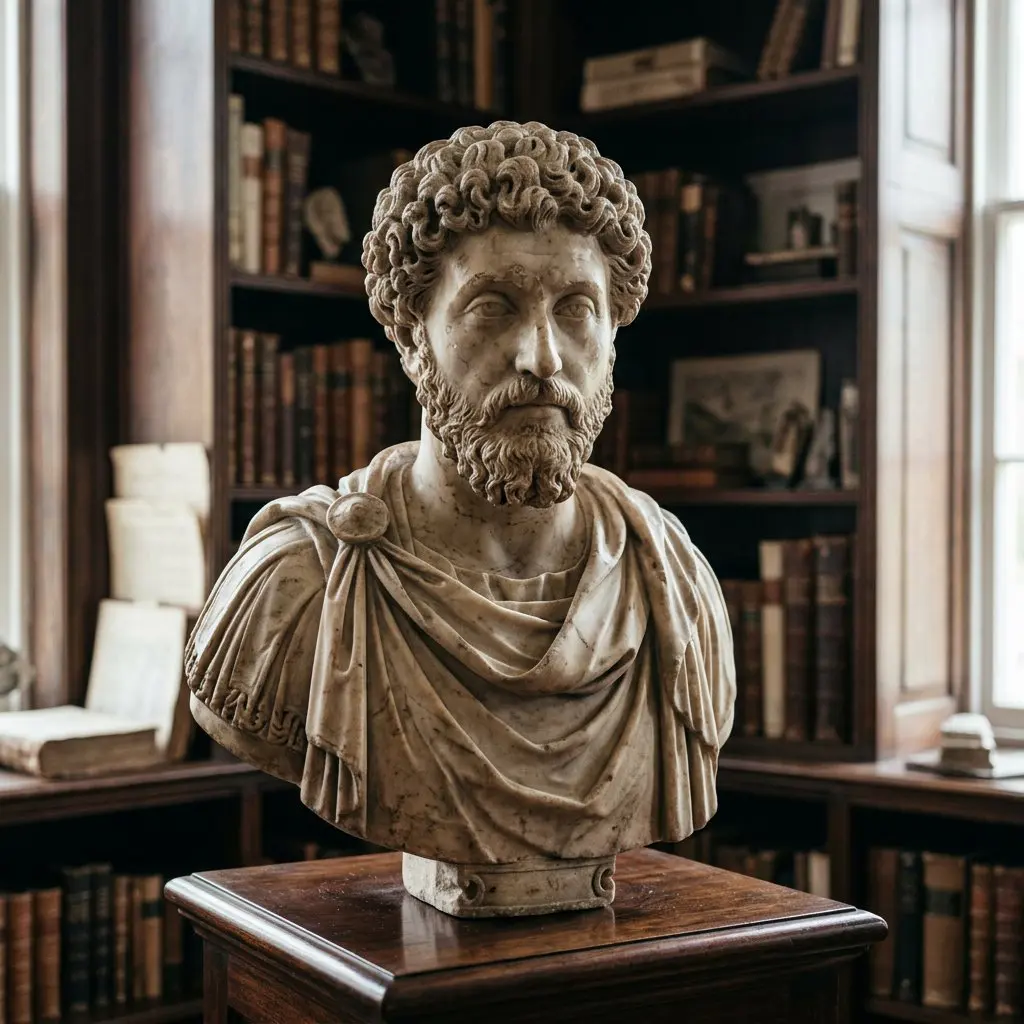
Marcus Aurelius bust
Learn how to identify a Marcus Aurelius bust and read museum-style object records. Compare marble and bronze replicas by material, scale, and fidelity to choose a museum-quality piece. Avoid common mix-ups and recognize defining portrait features.
Share:
Why this Roman portrait became the image of the philosopher emperor
Marcus Aurelius holds a distinctive place among Roman marble sculptures because his likeness came to suggest thought as much as power. Some portraits show him before his reign and therefore younger or less solemn, while later versions emphasize maturity and command. The full beard, composed expression, and carefully ordered features align closely with his later Stoic reputation and the writings known as the Meditations. In that sense, the bust is more than a likeness: it is a public image of intellect, restraint, and authority.
How to recognize the portrait – and avoid common mix-ups
| Feature | What to look for |
|---|---|
| Face and hair | A full beard, tight curls, and a calm, inward-looking gaze are common markers of Marcus Aurelius. |
| Catalog terms | A head shows only the head, a bust includes chest or shoulders, and a statue shows more of the figure. |
| Common mix-ups | Aurelian was a different emperor from a later period, while Minerva is a goddess and an unrelated classical subject. |
| Restoration | Added shoulders, drapery, or repaired losses can change the silhouette of an ancient work compared with a clean modern replica. |
What museum records can tell you about an original bust
- Material, date, dimensions, gallery location, and inventory number help you place the object physically and historically.
- Attribution history matters because scholarly opinion can change as new comparisons or research emerge.
- Notes on restored or integrated parts are essential, since added sections may affect how the portrait is read when compared with the way high-quality replicas are crafted to museum standards.
- References, provenance notes, and 3D documentation strengthen transparency and make study or comparison more reliable.
If you want a replica, prioritize material, scale, and fidelity
| Priority | Buying guidance |
|---|---|
| Material | Marble comes closest to the look most people associate with Roman portrait busts. Bronze offers a different but equally classical effect. Gold-toned versions seen elsewhere are usually more decorative than museum-style. For upkeep, see marble sculpture cleaning and care. |
| Scale | A bust works well on a shelf, console, or study surface, while a larger statue format needs the visual space of a pedestal or more open setting; consult the statue pedestal size guide to choose the right height and footprint. |
| Fidelity | Prioritize accurate beard treatment, curl pattern, expression, and surface finish over generic marketplace listings. In Museum Replicas’ marble and bronze sculpture categories, a made-to-order piece should respect known portrait types rather than rely on decorative shortcuts. If you want custom sizing or finishes, you can commission a marble statue replica. |
Related questions about Marcus Aurelius and his image
These short answers place the bust within the wider visual and historical record of Marcus Aurelius without turning away from the portrait itself. Researching multiple figures? See our Julius Caesar bust replica guide.
Who took over Marcus Aurelius?
Commodus succeeded Marcus Aurelius at the end of his reign in AD 180. That succession matters for portrait history because late images of Marcus Aurelius belong to the final phase of his rule, just before imperial representation shifted to his son.
What makes the equestrian statue of Marcus Aurelius historically significant?
The equestrian monument is one of the most famous surviving imperial images of Marcus Aurelius. Unlike a bust, it communicates rulership through scale, gesture, and public presence. It helped fix his appearance in cultural memory far beyond museum portrait heads and busts.
Did Marcus Aurelius have a coin?
Yes. Coin portraits of Marcus Aurelius circulated his image across the Roman Empire on a much wider scale than sculpture could. Coins are smaller and less detailed than busts, but the repeated facial conventions help explain why his sculpted portrait remains recognizable.
Who was born first, Jesus or Marcus Aurelius?
Jesus predates Marcus Aurelius. Marcus Aurelius was born in AD 121, which places him firmly in the 2nd-century Roman Empire. That chronology matters here because his bust belongs to the mature imperial portrait tradition of Rome, not the earlier world of the New Testament.
Article details:
- Published by:
- Museum Replicas
- Published to:
- Last modified:
- November 1, 2026
Share:
Continue learning: