
Julius Caesar Bust Statue Guide
A Julius Caesar bust brings unmistakable Roman presence to a room, but search results can be misleading. Pieces titled “Caesar” may actually represent Augustus or a more generic Roman ruler. This guide shows how to recognize a true Caesar portrait and compare materials, scale, weight, and finish before you buy.
Share:
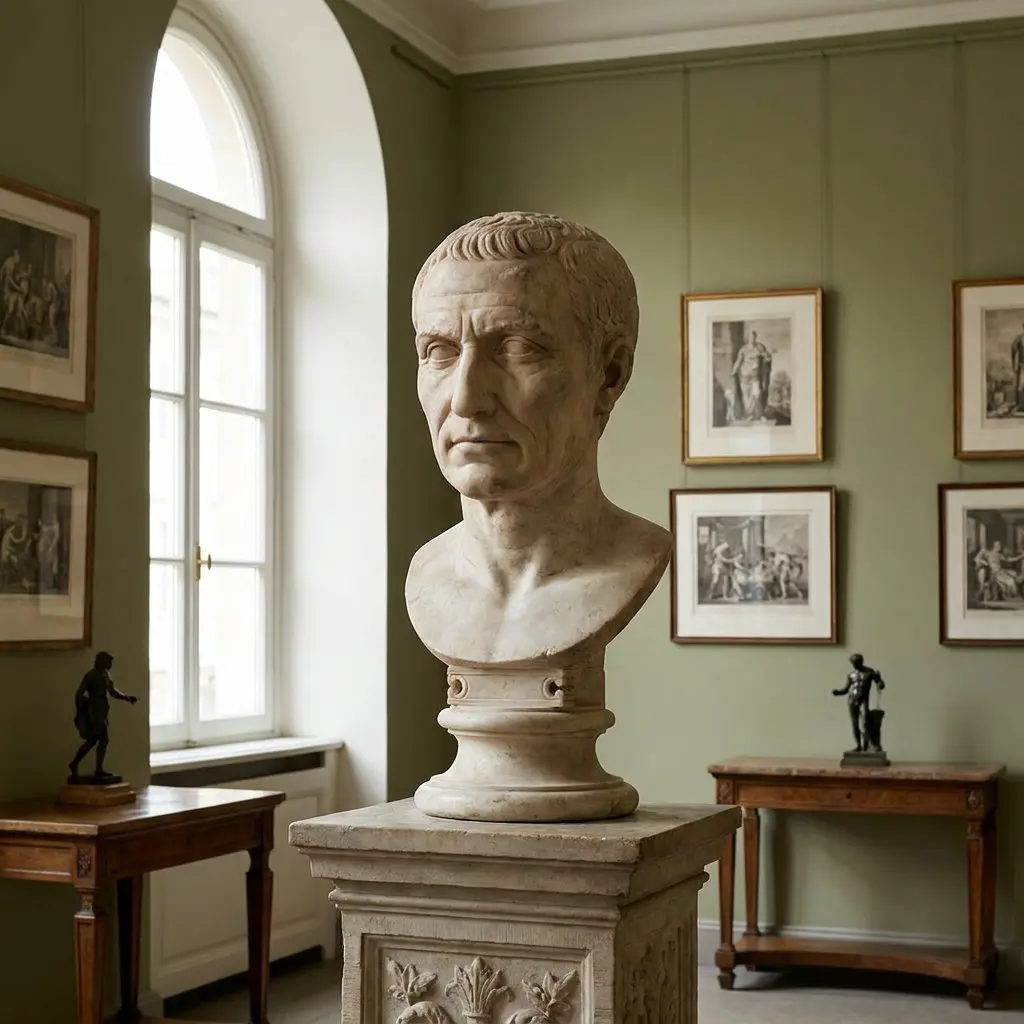
The Roman story behind Caesar’s enduring portrait
Julius Caesar was not simply a famous Roman leader, but a general, statesman, and writer whose image came to symbolize power, ambition, and political transformation. His rise through the First Triumvirate, his campaigns in Gaul, and his crossing of the Rubicon made him one of antiquity’s defining figures. After the civil war, his assassination and Augustus’s rise ensured that Caesar’s likeness remained central to Roman memory and visual culture.
How to recognize a Julius Caesar bust at a glance
- A bust usually shows the head and upper torso, though some sellers use “statue” loosely for a head or bust format.
- Many Caesar portraits emphasize mature features, a calm statesman-like expression, and often Roman drapery rather than a generalized imperial look.
- Do not rely on the title alone. A “Caesar bust” may actually depict Augustus or an unnamed emperor.
- You may also see naming variations such as Gaius Julius Caesar, Julius Cesar, or Caesar head bust.
Materials, scale, and finish: what changes the look of a replica
| What to compare | Why it matters |
|---|---|
| Material | Marble gives the classic Caesar look, while other cast or composite materials may be lighter or better suited to busy interiors. |
| Size and weight | Dimensions affect whether the piece belongs on a shelf, console, or pedestal and whether the surface needs extra support. |
| Finish and provenance | Study the carving, color, and surface finish closely. Most pieces on the market are newly made replicas, not ancient originals or antiques. |
What to check before buying a Julius Caesar bust replica
- Confirm the subject and look for a clear note about the original model, portrait type, or museum-style inspiration.
- Compare measurements, weight, packaging, shipping protection, and return terms before deciding.
- Choose scale intentionally: a compact bust works well on a library shelf, while a larger piece suits a dedicated display of Roman marble sculptures.
- If you are comparing Museum Replicas collections, start with marble busts when you want a classically grounded piece rather than generic décor.
Displaying a Caesar bust with museum-style balance
A Caesar bust gains presence when it is elevated on a pedestal, console, or substantial shelf. Match the placement to the piece’s scale, weight, and finish so the display feels deliberate and secure. Roman portraiture works especially well in a study, office, library, or gallery-like hallway. For marble-style replicas, simple dusting, stable placement, and attention to the recommendations in the statue pedestal size guide and marble sculpture care guide help preserve the overall effect.
Common questions about Julius Caesar portraits and replicas
Are there busts of Julius Caesar?
Yes. Ancient portraits associated with Julius Caesar do survive, and many later reproductions and modern replicas draw from those traditions. It is important to distinguish between an ancient likeness, a later copy of an ancient model, and a contemporary decorative replica. Because some identifications are debated, the model description matters.
What is the most famous statue of Julius Caesar?
Caesar is better known through a small group of famous portrait types and busts than through one universally agreed full statue. Museum discussions often focus on surviving portrait heads, while modern display pieces may adapt those recognized models. A celebrated ancient portrait, a Roman copy, and a modern replica are not the same thing.
How did Julius Caesar treat Jews?
Julius Caesar is generally understood to have taken a comparatively favorable position toward Jewish communities and to have confirmed certain privileges. That belongs to the broader history of his rule rather than to portrait identification, but it helps explain why Caesar remains an important figure well beyond military history.
What statue did Caesar cry at?
According to a well-known anecdote, Caesar wept before a statue of Alexander the Great because he felt he had not yet matched Alexander’s achievements at a similar age. The story helped later generations link Caesar with ambition, rivalry, and the heroic models of the classical world.
Article details:
- Published by:
- Museum Replicas
- Published to:
- Last modified:
- October 29, 2026
Share:
Continue learning: