Public Domain Painting Images
Find truly reusable images of famous paintings by searching museum open-access collections, digital libraries, and clearly labeled repositories. This guide explains how to verify rights on the exact file, locate high-resolution downloads, and know when a quick save is enough and when to choose a reproduction.
Share:
What makes a painting image truly public domain?
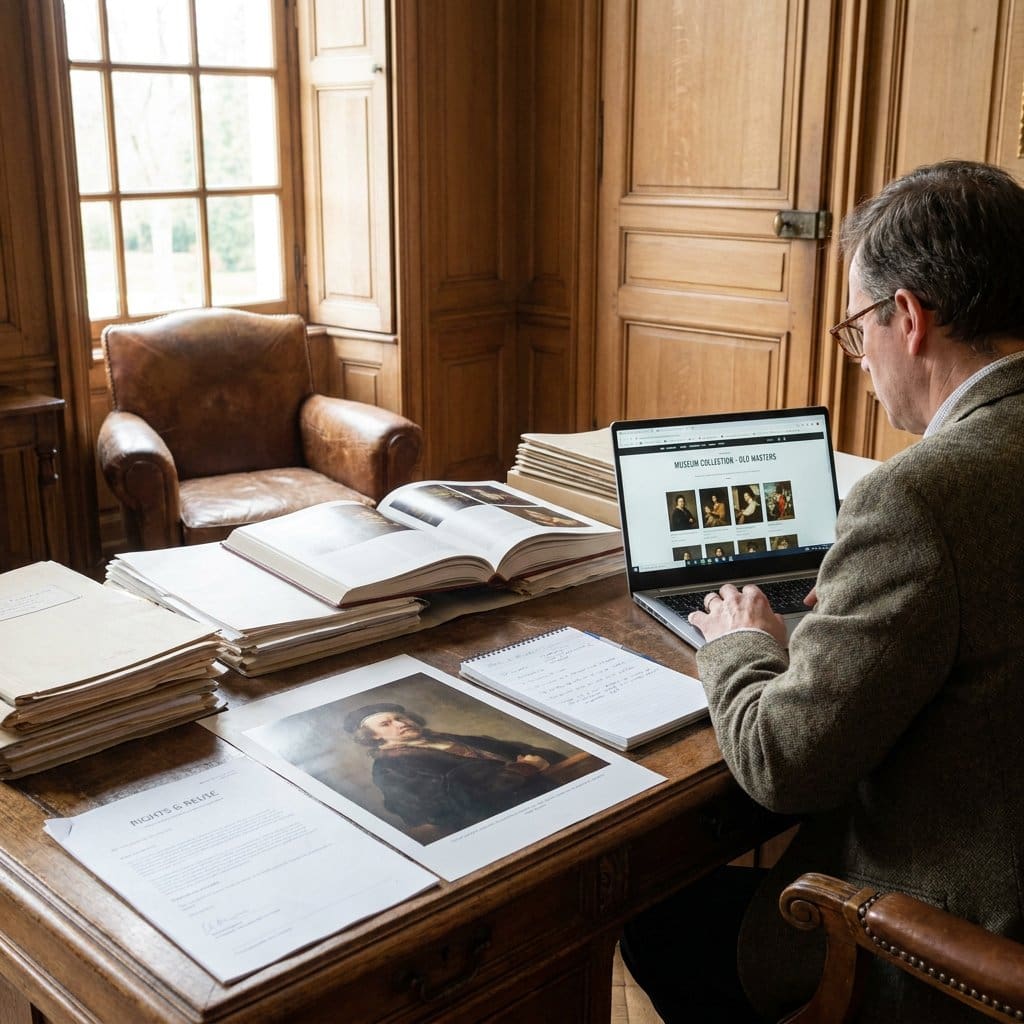
An old masterpiece may be public-domain artwork, yet the specific scan or photograph you find online still needs a clear status of its own. Public domain means no copyright claim applies to the work or file as labeled; an open license may allow reuse under stated conditions; free to view simply means you can look at it online. That is why item-level records matter. Institutions usually place rights notes on each artwork page. Exact reproductions of two-dimensional public-domain art are often treated differently from creative new photography, so always verify the file itself.
Where to find reliable public domain painting images
These source types are the most dependable places to look for reusable painting images.
| Source type | Best for | Useful search paths | Rights and download note |
|---|---|---|---|
| Museum open-access collections | Authoritative metadata and stronger download options | Search by artist, title, museum, or period | Usually the clearest item-level rights statements |
| Library and academic archives | Broad historical coverage and portrait collections | Search by genre, subject, collection, or date | Reliable records, but file sizes vary |
| Public media repositories | Easy browsing across many collections | Browse categories for portraits, schools, and movements | Confirm the original source record before reuse |
| Curated art directories | Fast discovery across artists and styles | Search by theme, alternate title, or genre | Useful for leads; verify rights at the source institution |
| Commercial listings and auction records | Identifying works and alternate versions | Use for discovery only | Usually weaker for reuse rights and master-file downloads |
A practical rights check before you download
Before saving any file, run a quick check on the exact record you plan to use:
- Read the rights statement on the individual item page, not just the museum or archive homepage.
- Confirm whether you are getting a full downloadable image, a cropped preview, or a low-resolution display file.
- Review any notes about attribution, donor limits, jurisdiction, or separate website terms before reuse.
- Save the source URL, artist name, artwork title, and rights label for future reference, especially for public reuse.
How to find high-resolution files worth keeping
On-page previews are often only the first layer of a record. Many collections show a smaller image in the browser and place the actual download deeper in the file details. Before saving, check pixel dimensions, file type, zoom quality, color accuracy, cropping, and whether the whole painting is visible. High-resolution public-domain paintings are far more useful for printing and design work than screen-sized images copied from listing pages. A reference image may be enough for study, while the question of Oil reproductions vs prints is different altogether.
Using public domain painting images in commercial work
Public-domain status often allows commercial reuse, but you still need to confirm that the exact digital file is openly reusable and not subject to separate restrictions. Copyright status is only one part of the picture; institutional terms, trademarks, and region-specific rules may still matter in practice. Before using an image in products, marketing, publishing, or print-on-demand, document the item record and rights label. If you need more detail on edge cases, consult a deeper guide focused on Using public domain art commercially.
From download to display: choosing the right format
A digital image is often enough for research, mood boards, presentations, or a simple personal print. For home or office display, however, the final result depends on size, print method, paper or canvas quality, and surface texture as much as on public-domain status. If you love a public-domain masterpiece but want a finished art object rather than a file, a reproduction may be the better choice, especially for classic oil paintings. To see how a public-domain image becomes a hand-painted canvas, explore our Custom oil painting reproduction process. Or Browse oil painting reproductions to find museum-inspired works ready to hang.
Article details:
- Published by:
- Museum Replicas
- Published to:
- Last modified:
- October 27, 2026
Share:
Continue learning: