Traditional Dining Room Wall Art
Traditional dining room wall art is defined less by trend and more by character: classical subject matter, balanced composition, and a finished framed presence that feels settled in the room. If you want the quickest path to the right choice, start with the subject first, then refine the size, placement, and frame to suit your architecture and furniture. The most enduring options tend to be portraits, still lifes, landscapes, botanicals, and carefully chosen oil painting reproductions rather than short-lived wall trends.
Share:
The design cues that make artwork feel timeless
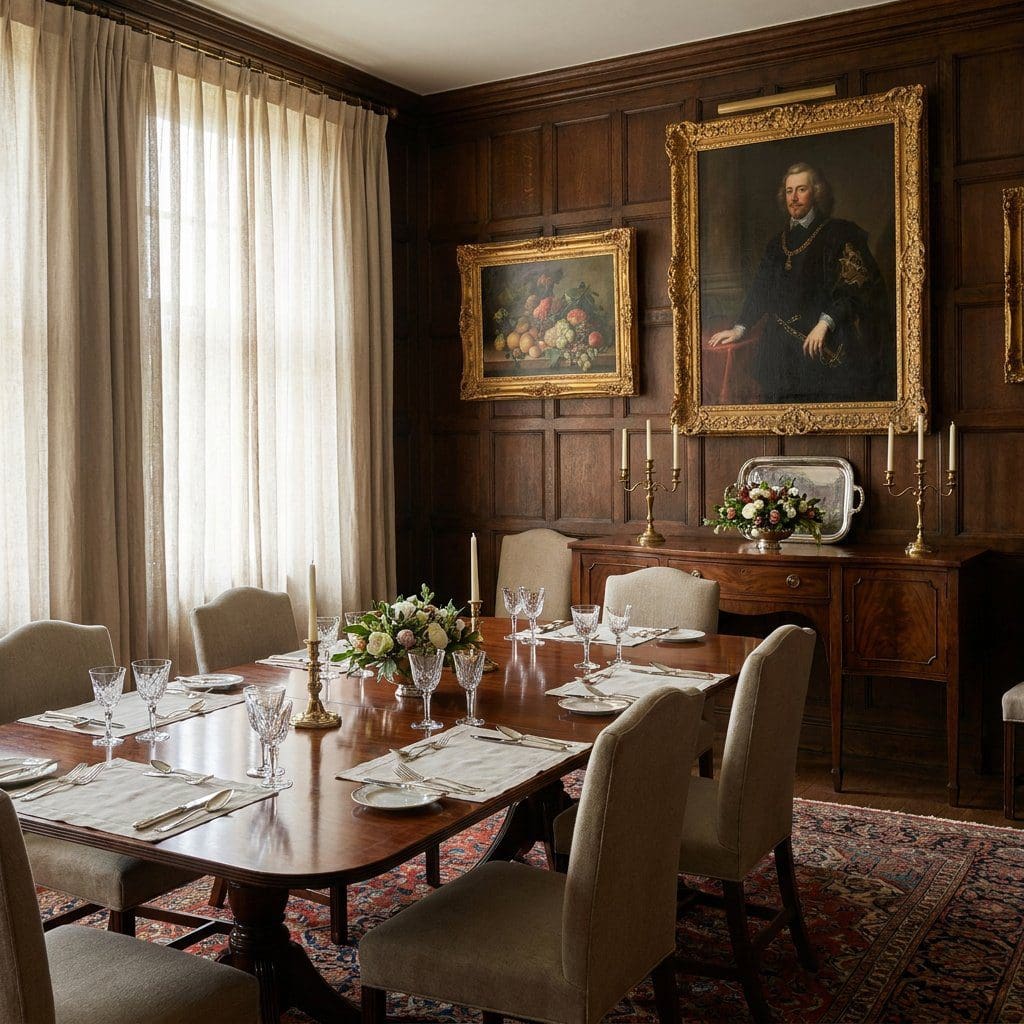
Traditional wall art for a dining room usually shares four qualities: heritage-minded subject matter, formal balance, refined framing, and a sense of permanence. The goal is not to fill a blank wall, but to add warmth, conversation, and a sense of occasion around the table. That is why traditional dining room wall art differs from bold abstract statements, retro graphics, or trend-led print sets. Even a large piece can feel entirely classic when the palette is restrained, the composition is composed, and the frame has substance, qualities often found in Neoclassical oil paintings.
Portraits and figure studies with heritage character
Portraiture is often the clearest signal of traditional dining room art. Formal poses, period dress, and an old-world atmosphere bring dignity and structure to the space, especially in rooms with dark wood furniture, symmetry, or a strong central axis. For a classic result, choose museum-like portraits over playful reinterpretations. Reproduction portrait oil paintings and period-led works, including Renaissance oil paintings, Baroque, Rococo, Neoclassical, Realist, and Romantic works, are especially effective. Museum Replicas specializes in handcrafted reproductions of public-domain masterpieces, with custom sizing that can help a formal dining room feel properly resolved. For selection and sizing advice, see the Portrait oil reproductions guide.
Still lifes, fruit, and floral works that belong in a dining room
Still lifes are a natural fit for a traditional art scheme in a dining room because they echo hospitality without becoming overly literal. Fruit, floral, and table-inspired subjects bring warmth, color, and formality more gracefully than novelty kitchen graphics or café-themed prints. They work particularly well above a sideboard or buffet, where they reinforce the room’s purpose. A classic oil painting reproduction with botanical or still-life subject matter will usually feel more lasting than a fast-changing decorative set. If you prefer something more ornate, Rococo oil paintings can introduce elegant, decorative detail to refined dining rooms.
Landscapes and botanicals for a softer classic scheme
Landscapes, botanicals, and architectural scenes offer a gentler alternative to portraiture while still keeping a traditional mood. The versions that read as timeless tend to have restrained color, balanced composition, historical atmosphere, and substantial framing. If the room is formal, avoid tropical brights, retro entertainment posters, or overly playful imagery. These quieter subjects sit well with timber finishes, upholstered chairs, drapery, and layered textiles, adding depth without overwhelming the dining setting.
Choose scale and placement with the room’s architecture in mind
| Placement | Best for | Proportion and hanging guidance |
|---|---|---|
| Above a sideboard | Classic dining rooms with a clear secondary focal point | Aim for art about two-thirds the width of the furniture below. Hang it with enough space above the top surface to breathe, while keeping the overall arrangement centered. |
| Main dining wall | One substantial focal painting | Use a larger work if the wall is tall or viewed from farther away. Keep the composition centered to the table or wall paneling rather than drifting off-axis. |
| Symmetrical pair | Formal rooms with balanced furniture layouts | Leave even spacing between frames and align their heights precisely. Pairs suit narrower walls or flanking positions beside cabinetry, mirrors, or doors. |
| Restrained gallery arrangement | Collected traditional interiors | Keep the selection tight, with shared frame finishes and calm spacing. Symmetry and visual breathing room matter more than filling every inch of wall. |
| Open-plan dining area | Spaces connected to living or kitchen zones | Repeat colors from adjoining rooms, but keep one clear focal artwork so the dining area retains its own identity. |
Framing, finish, and color choices that reinforce tradition
- Framed works usually suit traditional dining rooms better than unframed canvas. Dark wood, gilt, and classic molding profiles help the art feel established and complete.
- Warm earth tones, deep greens, burgundy, navy, and softened neutrals are especially effective because they support a formal, welcoming atmosphere.
- Echo the room’s existing finishes from drapery, flooring, tableware, cabinetry, or metal accents rather than trying to match every color exactly.
- For sizing, frame profiles, and hanging tips that create a museum-like presence, see the Framed oil painting reproductions guide.
A few related questions worth clarifying
These common questions often come up when comparing timeless dining room art with current decorating advice. The key is to filter every idea through the same standard: does it support a room that feels established, balanced, and refined?
What are the trending wall art styles for 2026?
In 2026, broader wall art trends include oversized pieces, curated gallery-style groupings, layered texture, and warm earthy palettes. Some of those directions translate well into a traditional dining room, especially framed classics, portraiture, botanicals, still lifes, and select Baroque oil paintings. Others, such as highly graphic statement art or novelty-led themes, are better suited to contemporary spaces. For a traditional room, longevity matters more than novelty.
What is the 2/3 rule for hanging pictures?
The two-thirds rule means the artwork or arrangement should be about two-thirds the width of the table, sideboard, or console beneath it. It is a helpful guide because it creates balance without making the piece feel too small or too heavy. In traditional interiors, that proportion works especially well for one substantial painting or a carefully matched pair. Ceiling height, wide frames, and surrounding moldings may justify slight adjustments.
What is the lucky painting for a living room?
So-called lucky artwork is usually based on cultural belief and personal meaning rather than one universal decorating rule. Subjects often associated with harmony or abundance include serene landscapes, fruit still lifes, floral works, and calm water scenes. Those can also translate beautifully into traditional interiors, provided the scale, palette, and framing suit the room. Symbolism matters, but so does visual balance.
What is the latest trend for walls?
Wall trends often refer to architectural treatments rather than the artwork itself. In 2026, that includes paneling, molding, richer paint colors, and layered framed displays. In a traditional dining room, these features should support the artwork rather than compete with it. Heritage-friendly wall treatments pair especially well with framed paintings, giving the room depth while keeping the art as the focal point.
Article details:
- Published by:
- Museum Replicas
- Published to:
- Last modified:
- October 27, 2026
Share:
Continue learning:
